Bed Bug Pictures: What Bed Bugs, Babies, Eggs, Stains and Bites Actually Look Like
Real photos of every bed bug sign you are likely to find: adults at actual size, baby bed bugs (nymphs), eggs and shed skins in a mattress seam, droppings on sheets and bed frames, bite patterns, and the bugs most often mistaken for them. What to look for in each picture and what to do next.
A bed bug is a flat, oval, rust-brown insect about the size of an apple seed (5 to 7 mm), with six legs, short antennae and no wings. But the bug itself is often the last thing you see. Most people first find the signs it leaves: tiny black dots along a mattress seam, rusty smears on a sheet, pale empty skins, or a row of itchy bites. The pictures below show each of those, real size and in place, with what to look for in every one.
If you want the life-cycle table, the full hiding-spot list and a hotel check, read the bed bug identifier. This page is the visual companion: what you will actually see when you pull back the sheet.
Bed bug pictures at a glance
| What you find | Size | Colour | Where it shows up |
|---|---|---|---|
| Adult bed bug | 5 to 7 mm, apple seed | Rust brown; darker red and swollen after feeding | Mattress seams, headboard, bed frame joints |
| Baby bed bug (nymph) | 1.5 to 4.5 mm | Pale, almost clear; bright red right after feeding | Same places as adults |
| Eggs | About 1 mm, rice-grain shape | Pearly white | Glued in cracks, seams and fabric folds |
| Shed skins | Same as the bug that left them | Pale yellow, hollow, papery | Seams, corners, under the mattress label |
| Droppings (fecal spots) | Pinpoint to 1 mm dots | Black or dark brown, like a marker dot | Seams, sheets, frame, wall behind the bed |
| Blood smears | Small streaks | Rusty red-brown | Sheets and pillowcases |
| Bites | Small welts | Red, sometimes with a darker centre | Skin left uncovered in bed |
Adult bed bugs: apple-seed size, flat until they feed
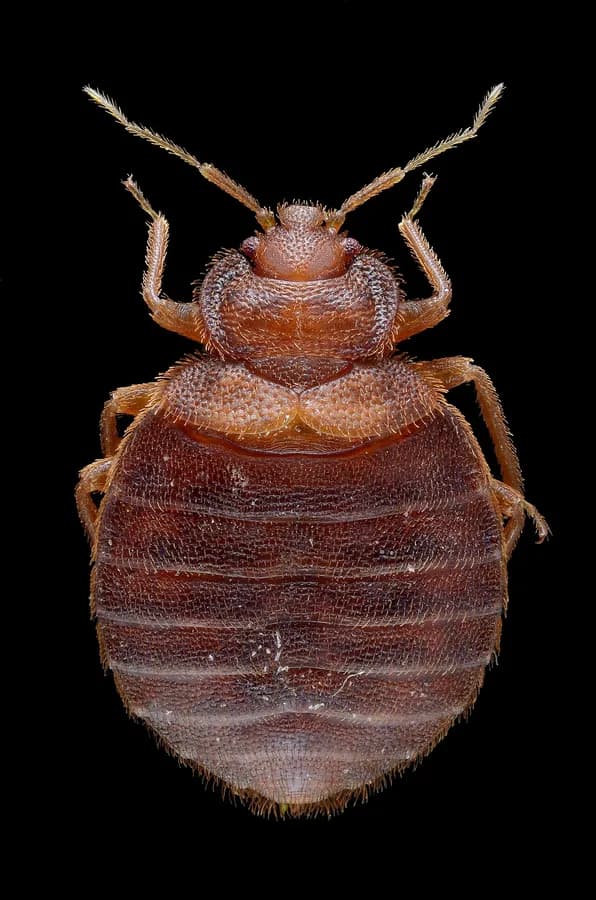

What to look for:
- Shape. Flat and oval when unfed, thin enough to slide into a crack the width of a credit card. Seen from the side it looks like a lentil.
- Colour. Reddish brown to mahogany. The body has fine horizontal bands and a slightly hairy, matte look rather than a shine.
- Head end. A small head with two short antennae and a wide, crescent-shaped plate behind it that wraps around the head like a collar.
- No wings. Only two tiny wing pads. Bed bugs cannot fly or jump; they walk at roughly the speed of an ant.
Colour change after feeding. A bed bug takes a meal in 3 to 10 minutes. Right after feeding it swells to up to 10 mm, stretches into a longer, balloon-like shape, and turns dark red. Over the next few days, as it digests, it goes back to flat and brown. So a mixed group of flat brown bugs and fat dark red ones is still one species.
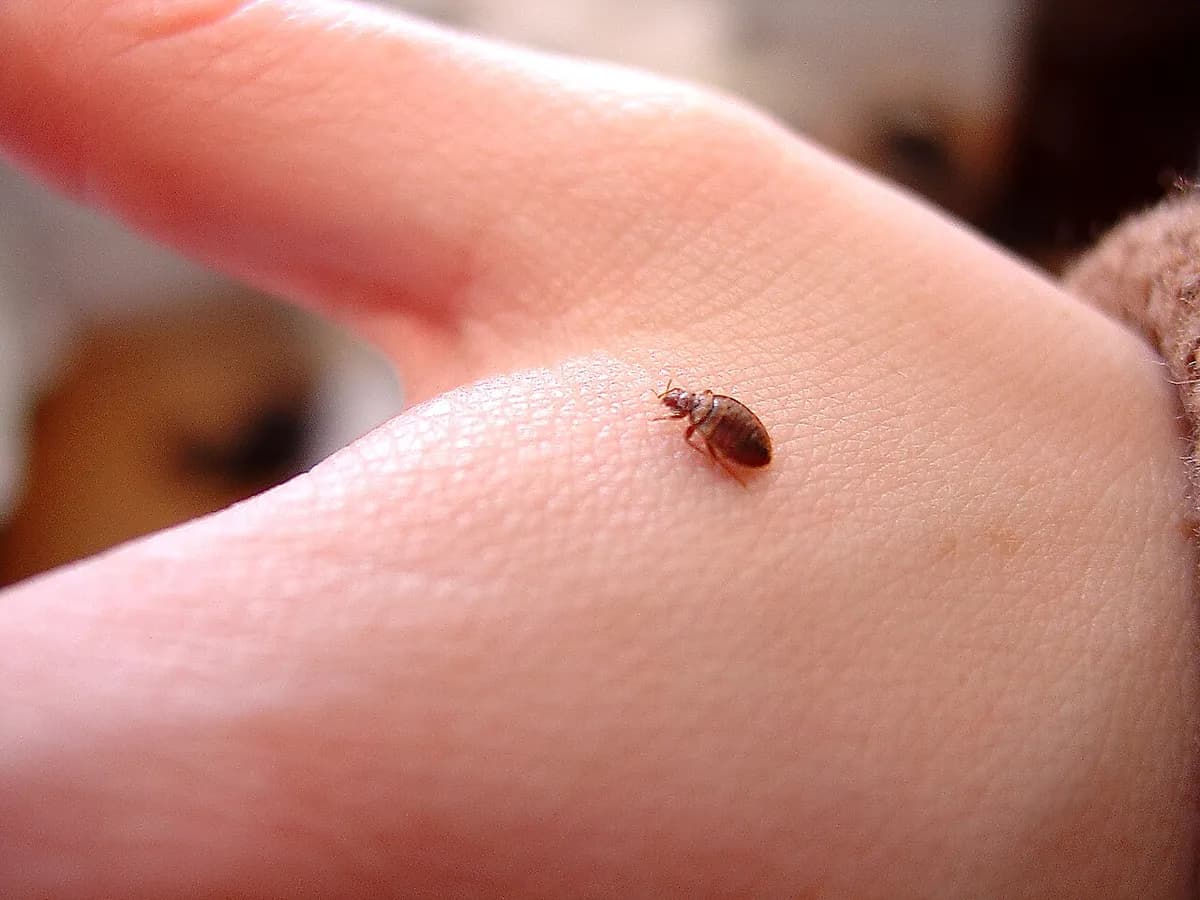

A US penny is 19 mm across, so an adult bed bug is about a quarter of the coin's width. That makes a coin the best scale reference in your own photo.
Baby bed bugs (nymphs): tiny, pale and red after a meal
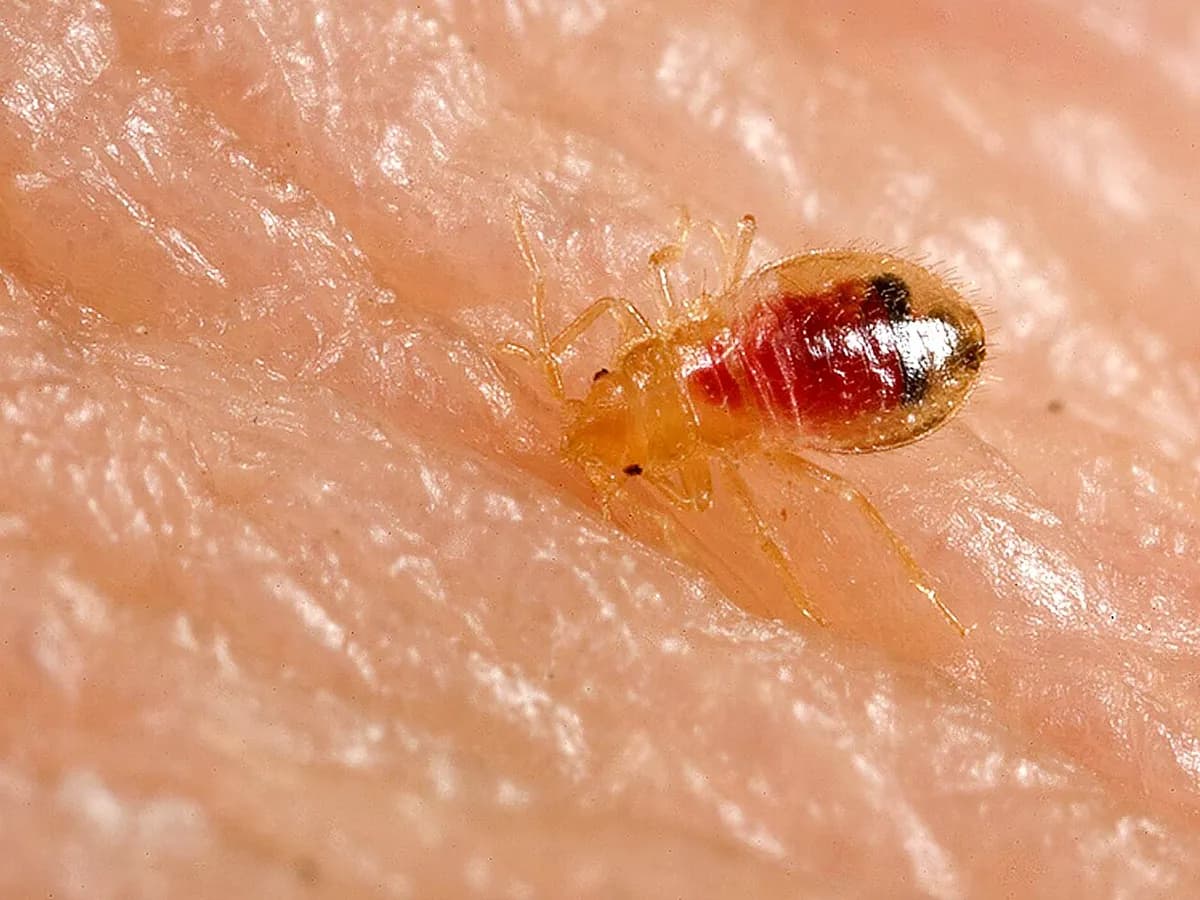

Bed bugs hatch as miniature adults and grow through five nymph stages, shedding their skin each time and needing a blood meal before every moult.
What to look for:
- Size. About 1.5 mm at hatching (a pinhead), reaching 4.5 mm in the last stage.
- Colour. Straw-coloured to almost clear when unfed, which makes the youngest ones very hard to see on a light mattress. After feeding they show a bright red spot that fills the abdomen, the easiest moment to spot them.
- Same outline. Flat, oval, six legs, short antennae. Nothing else in a bed looks like a small clear oval with red inside.
Seeing nymphs matters: it means bed bugs are breeding where you sleep, not one hitchhiker from a suitcase.
Bed bug eggs and shed skins: pictures of an infested mattress seam
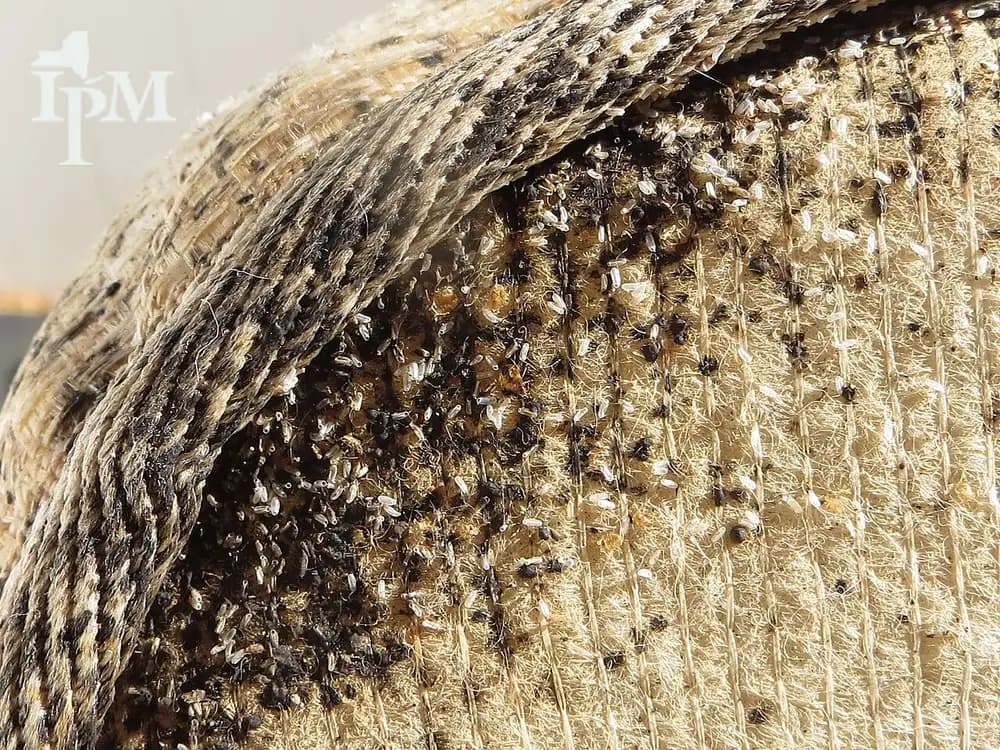

This is what an established infestation looks like up close. Most homes are found earlier, with only a few of each sign, but the features are the same.
Eggs. About 1 mm long, pearly white and shaped like a grain of rice, laid singly or in small clusters and glued in place, so they do not brush off. Eggs older than about five days show a small dark eye spot. Empty shells look the same but flattened and slightly see-through, with an open end.
Shed skins. Light yellow-brown, hollow and papery copies of the bug, often still with legs. They pile up where bugs rest and are one of the most reliable signs because they do not move.
Mattress label and piping. The raised cord (piping) around the mattress edge, the corners and the fold under the label are where these signs collect first. Look along them with a flashlight held flat so small things cast a shadow.
Bed bug droppings and stains: what the black spots look like
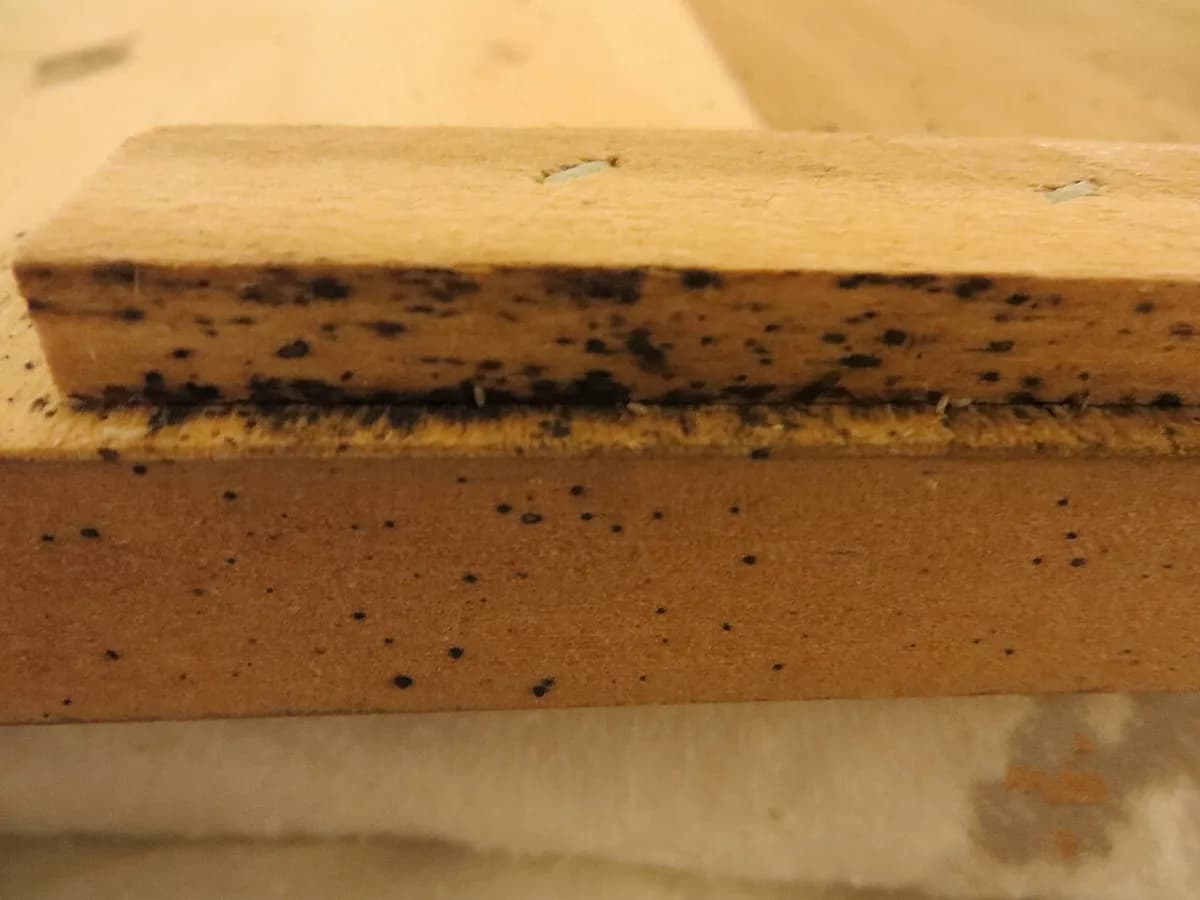

Bed bug droppings are digested blood. That is why they look different from dirt, mould or crumbs:
- On fabric they soak in and spread slightly, like a dot from a felt-tip marker. They do not sit on top of the fibres.
- On wood, plastic or walls they dry as raised dark specks, often in clusters or short streaks near a crack.
- The wipe test. Rub a spot with a damp cloth or wet cotton bud. A bed bug dropping smears rusty red-brown. Dirt stays grey, and mould does not turn red.
Stains on sheets. Small rust-coloured smears or spots on sheets and pillowcases usually come from a bug crushed after feeding or from a bite that bled a little. A few rusty spots plus dark marker-like dots in the seam beside them is a strong combination.
Pictures of bed bugs in the bedroom: where to look
Bed bugs stay within a few metres of where people sleep or sit for long periods. Check in this order with a bright flashlight and an old credit card to sweep into seams:
- Mattress seams, piping, tags and corners, then the same on the box spring, including the fabric underneath.
- Bed frame joints and slats, and every screw hole.
- The back of the headboard, especially where it touches the wall. Take it off the wall if you can; this is the most commonly missed spot.
- Nightstands: inside drawer joints and underneath.
- Electrical outlets and switch plates near the bed, along baseboards and behind picture frames.
- Sofas and recliners if someone sleeps or naps there: seams, under the cushions, the underside lining.
- Luggage and bags after travel, along zips and straps.
Bed bugs prefer rough wood and fabric to smooth metal or plastic, and dark crevices to open surfaces. A bug walking across a white sheet in daylight is unusual; most are found in seams and cracks.
Bed bug bites pictures
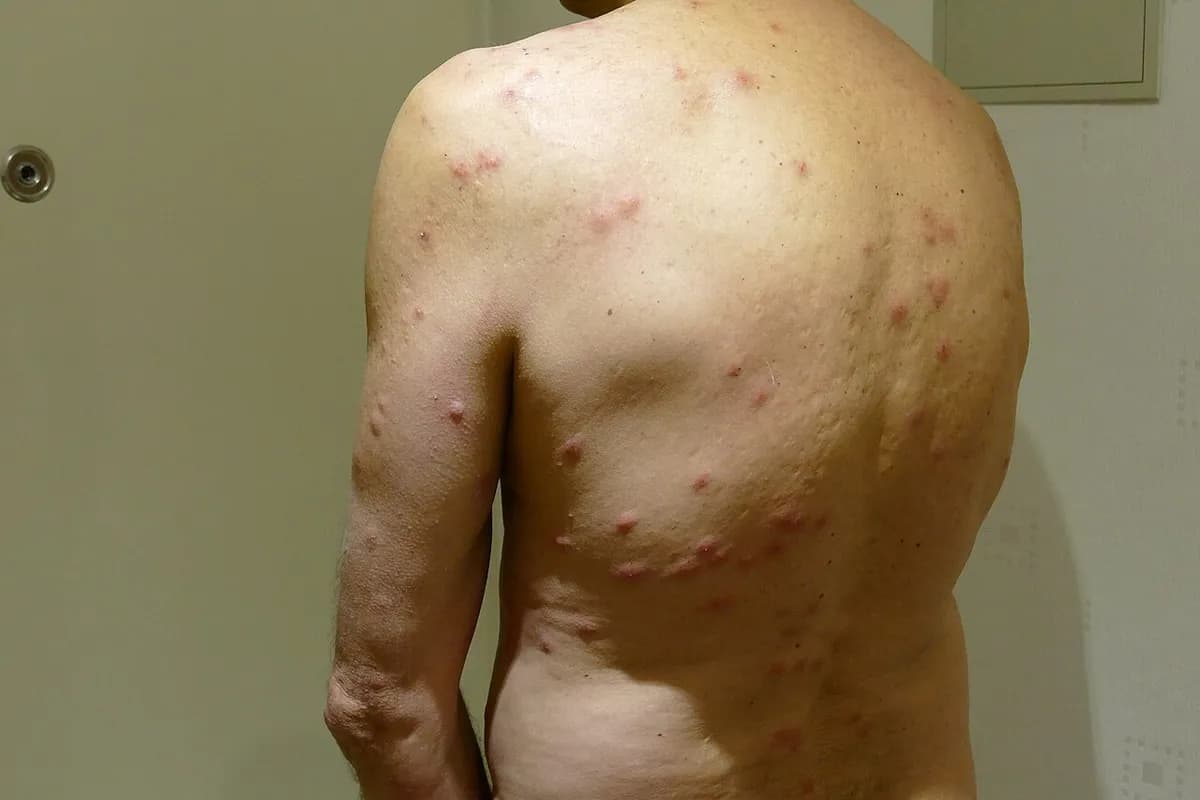

What to look for: small, raised, itchy red welts, often in a row or zigzag of three or more, or a tight cluster, on the skin that was outside the covers (face, neck, shoulders, arms, back, hands). They usually appear the morning after, but in some people take one to three days to show. On darker skin they may look purple or dark brown rather than red and be easier to feel than see.
Bites alone cannot prove bed bugs. Some people never react at all, and mosquito, flea and chigger bites can look very similar. Treat bites as a reason to search the bed, then confirm with the bugs, eggs, skins or droppings shown above. To compare the three most confused bites side by side, see bed bug bites vs mosquito vs flea bites.
For relief, wash with soap and water and use a cold compress or an over-the-counter anti-itch cream. See a doctor if bites blister, show signs of infection (spreading redness, warmth, pus) or you have a widespread allergic reaction.
Bugs that look like bed bugs
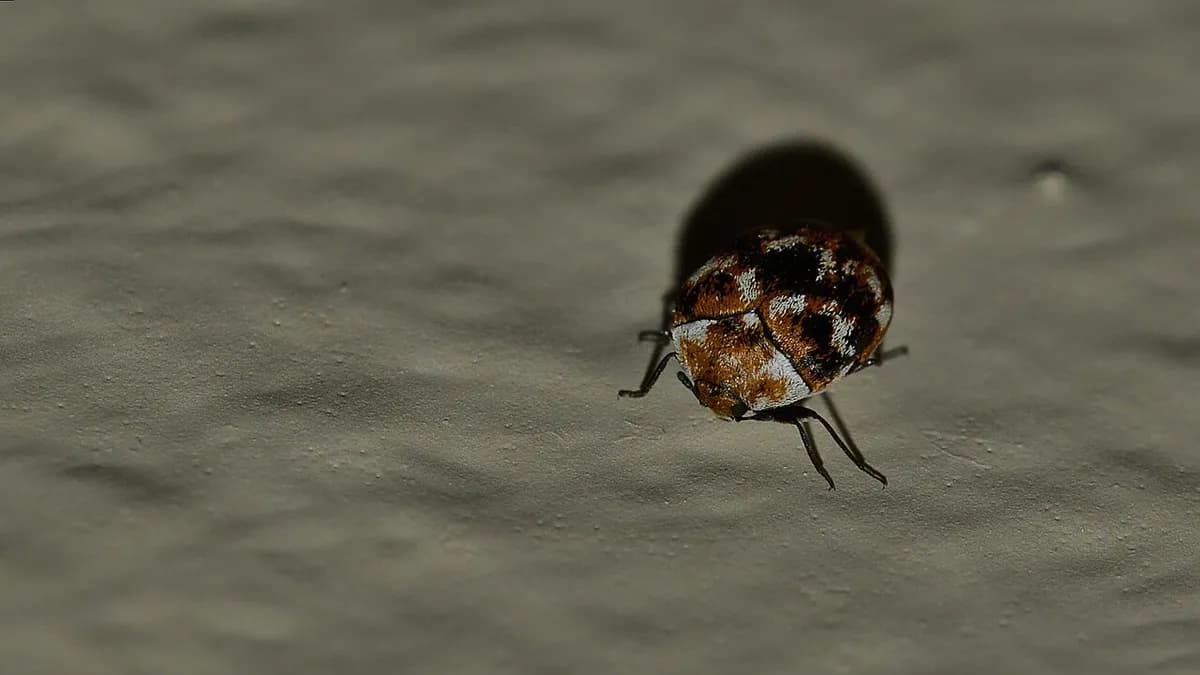

Carpet beetles are the most common false alarm. Adults are 2 to 4 mm, round rather than flat, patterned with white, brown and yellow scales, and they fly (you often find them on windowsills in spring). Their fuzzy, bristly larvae live in carpets and closets and can cause an itchy rash that gets blamed on bed bug bites.
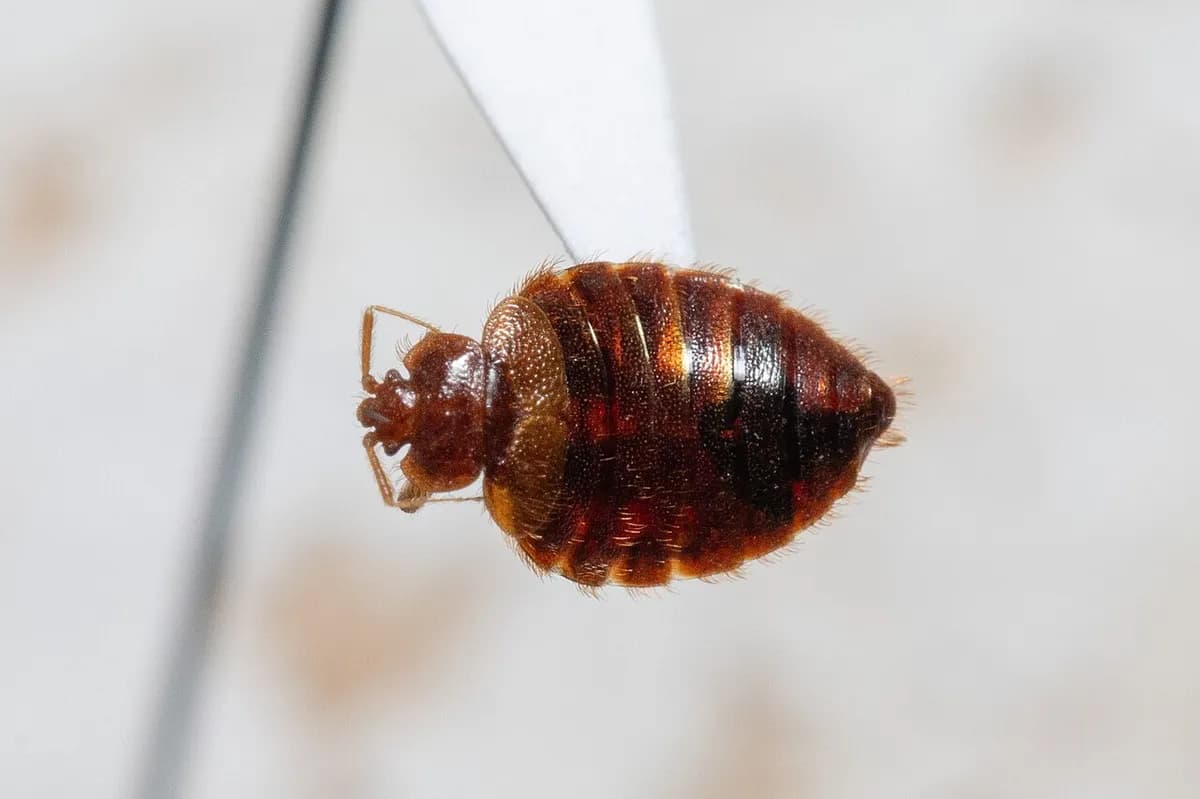

Bat bugs are close relatives of bed bugs and look the same in a phone photo. The clue is location: they come from bats in the attic or walls and show up near ceilings and upper floors, often after bats leave. They need different treatment (the bats have to be excluded first), so have a professional confirm under magnification.
Other common mix-ups:
| Lookalike | How to tell it from a bed bug |
|---|---|
| Flea | Narrow, flattened side to side, dark, and jumps. Found near pets, carpets and ankles. |
| Tick | Eight legs, not six, and no separate head. Attaches and stays on the skin. |
| Cockroach nymph | Long antennae and two tail feelers, runs fast. See our roach pictures. |
| Spider beetle | Round, shiny, humped body on long thin legs; looks like a tiny spider. Found in pantries. |
| Booklouse | About 1 mm, pale and soft, found near damp paper and books. Does not bite. |
If what you found is small and dark but not flat and oval, our guide to tiny black bugs in the house covers the ten usual suspects.
How to take a picture that can confirm a bed bug
- Catch it first. Press clear packing tape over the bug or put it in a sealed bag or pill bottle. Bed bugs move steadily and slip into seams.
- Shoot from directly above, in daylight or under a white torch, with a coin beside it for scale.
- Tap to focus on the bug, not the fabric, and take a second photo from the side to show how flat it is.
- Photograph the evidence too: the seam, the dots and any skins, not just the bite.
If you are not sure, photograph it and let Bug Identifier check it; the app tells bed bugs apart from carpet beetles, bat bugs, fleas and roach nymphs from one photo and says what to do next.
What to do if your pictures match
- Do not move to another bed or room. Bed bugs follow and the problem spreads.
- Wash and dry bedding and clothes from the bedroom on high heat (at least 30 minutes in the dryer), and bag them until clean.
- Vacuum seams and cracks, then seal the vacuum bag in plastic and put it in an outside bin.
- Fit encasements on the mattress and box spring to trap any bugs inside and make new signs easy to see.
- Call a licensed pest professional. Store-bought sprays and foggers rarely reach the eggs in seams, and most infestations need two or more visits.
- Keep checking. Put interceptor cups under the bed legs and look at the seams weekly; new droppings or skins mean bugs are still active.
Frequently Asked Questions
What do bed bugs look like to the human eye?
Adults look like a flat, rust-brown apple seed, about 5 to 7 mm long, with six legs and no wings. After feeding they are rounder, longer and darker red. Babies are smaller and pale, and turn red after a meal.
What do baby bed bugs look like?
Baby bed bugs (nymphs) are 1.5 to 4.5 mm, pale yellow to almost clear, with the same flat oval shape as adults. After feeding they have a bright red spot inside the body, which is when they are easiest to see.
What do bed bug eggs look like?
Bed bug eggs are about 1 mm, pearly white and shaped like a grain of rice, usually glued in clusters along mattress seams, in cracks of the bed frame or in fabric folds. Older eggs show a dark eye spot.
What does bed bug poop look like?
Black or dark brown dots about the size of a pen tip that soak into fabric like a marker dot. If you wipe one with a damp cloth it smears rusty red-brown, because it is digested blood.
Can you see bed bugs on sheets?
Sometimes, especially a red, fed nymph or adult at night, but more often you see their signs on sheets: small rusty blood smears and dark droppings. The bugs themselves usually hide in the seams, frame and headboard during the day.

Identify any bug in seconds
Download Bug Identifier and get instant AI-powered identification with danger levels, species profiles, and safety information.