Bugs in Flour and Rice: What They Are, Is It Safe to Eat, and How to Get Rid of Them
The bugs in flour and rice are almost always weevils, flour beetles, sawtoothed grain beetles, Indian meal moth larvae or flour mites. Identify yours with pictures, find out if the food is safe, and clear the pantry for good.
Not sure what you found? Identify it from a photo, freeThe bugs in flour and rice are pantry pests that came home inside a bag from the store or mill, not from your kitchen being dirty. In rice, pasta and whole grains it is usually a rice weevil (a 2 to 3 mm brown beetle with a long snout). In flour, cake mixes and cereal it is a flour beetle (3 to 4 mm, flat, reddish brown) or a sawtoothed grain beetle. "Worms" with silky webbing in either are Indian meal moth larvae, and moving "dust" is flour mites.
None of them bite people or spread disease. Eating a few by accident is harmless, but heavily infested food tastes off and should go in the bin. The fix is the same for all of them: find every infested package, throw it out, clean the shelves and store new dry goods in airtight containers.
If you are not sure which one you have, put one on a white plate, take a close-up photo and run it through the free bug identifier.
Which bug is in your flour or rice?
| Bug | Size | What it looks like | Usually found in | Tell-tale sign |
|---|---|---|---|---|
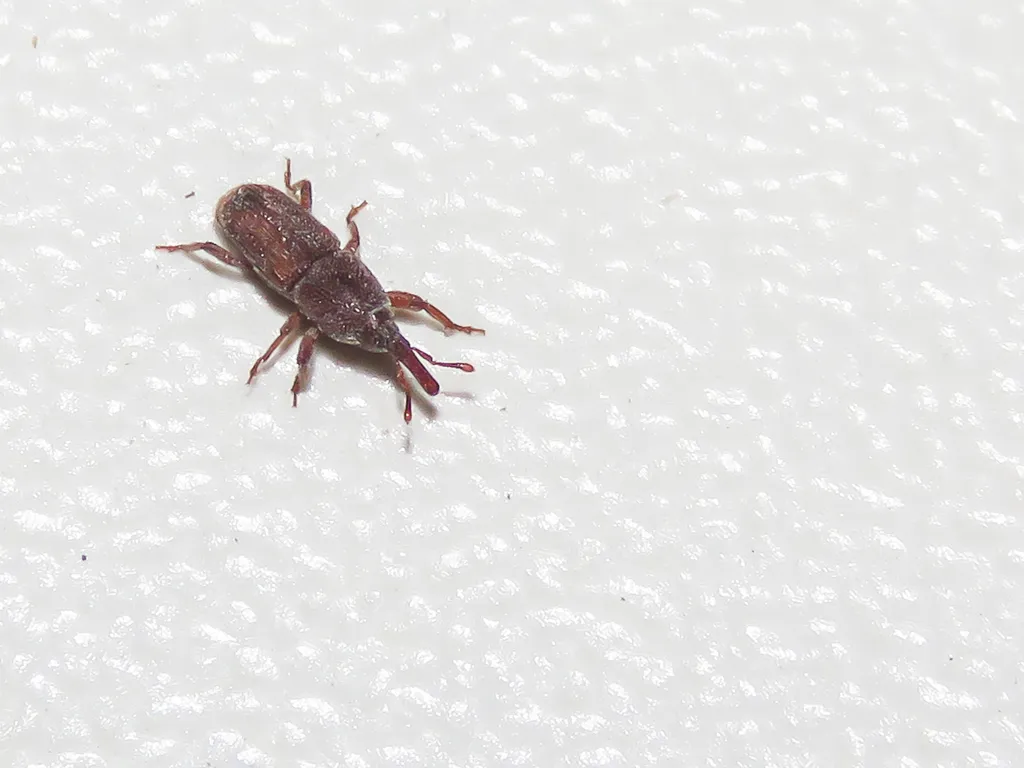
| Rice weevil / maize weevil | 2 to 3 mm | Dark reddish brown, long snout, four faint pale spots on the back | Rice, whole grains, pasta, dried corn, popcorn | Small round exit holes in grains; grains hollow or dusty |
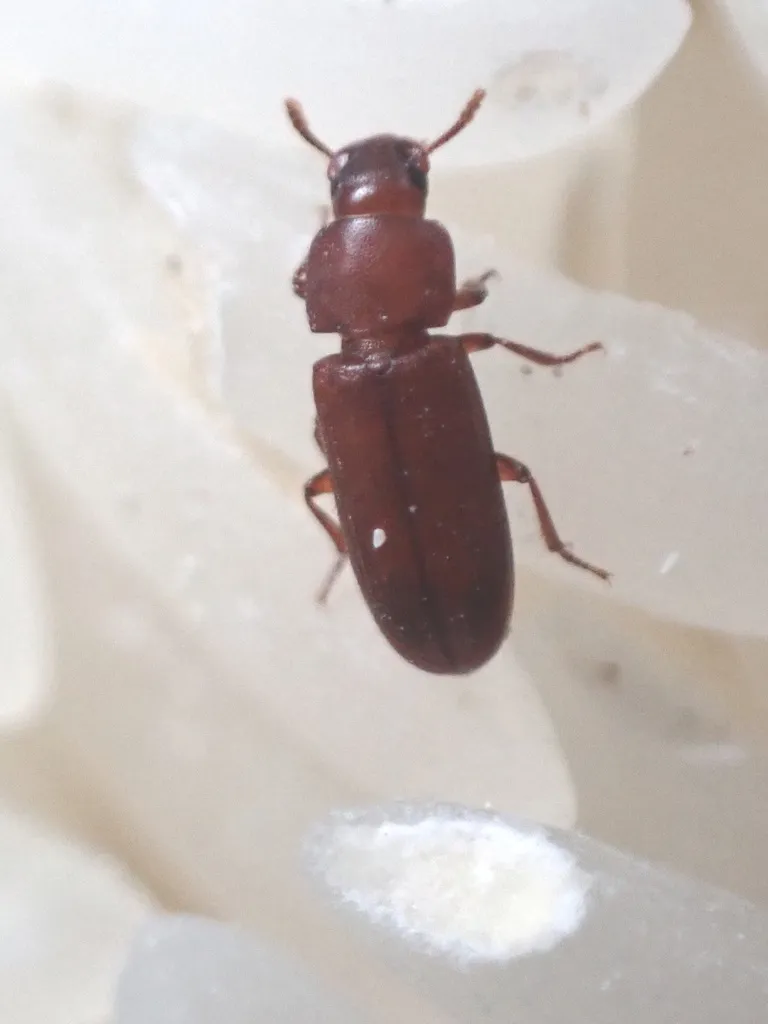
| Red / confused flour beetle | 3 to 4 mm | Slim, flat, shiny reddish brown, no snout | Flour, cake and pancake mix, cereal, pet food | Flour turns greyish and smells sharp or musty |
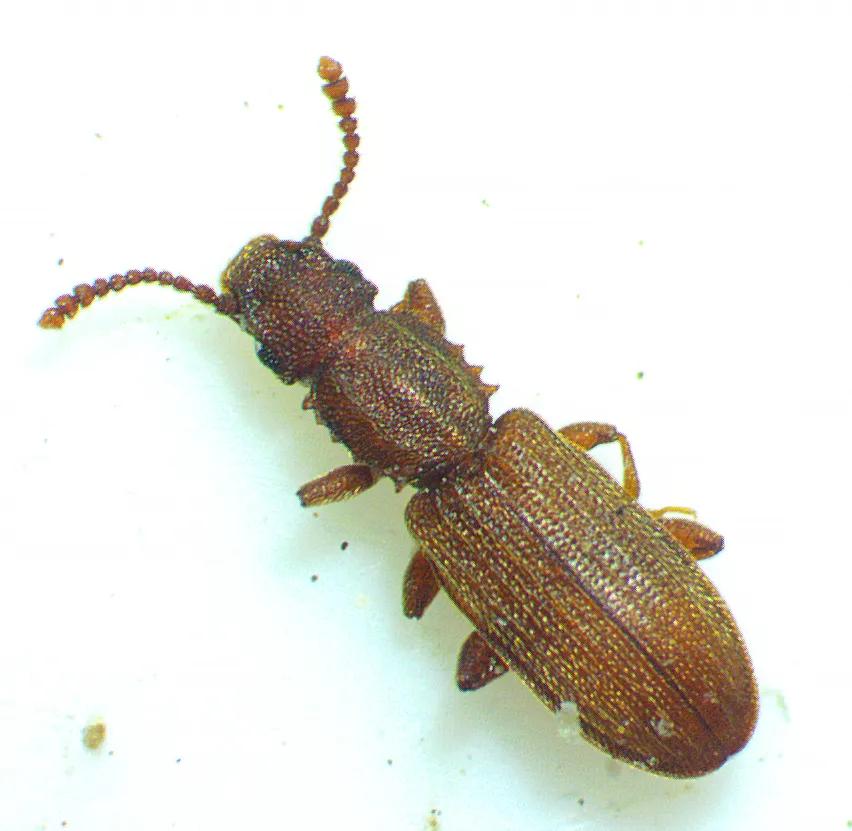
| Sawtoothed grain beetle | 2.5 to 3 mm | Very slim and flat, six "teeth" along each side behind the head | Cereal, oats, flour, dried fruit, nuts, pet food | Squeezes into packages that look sealed |
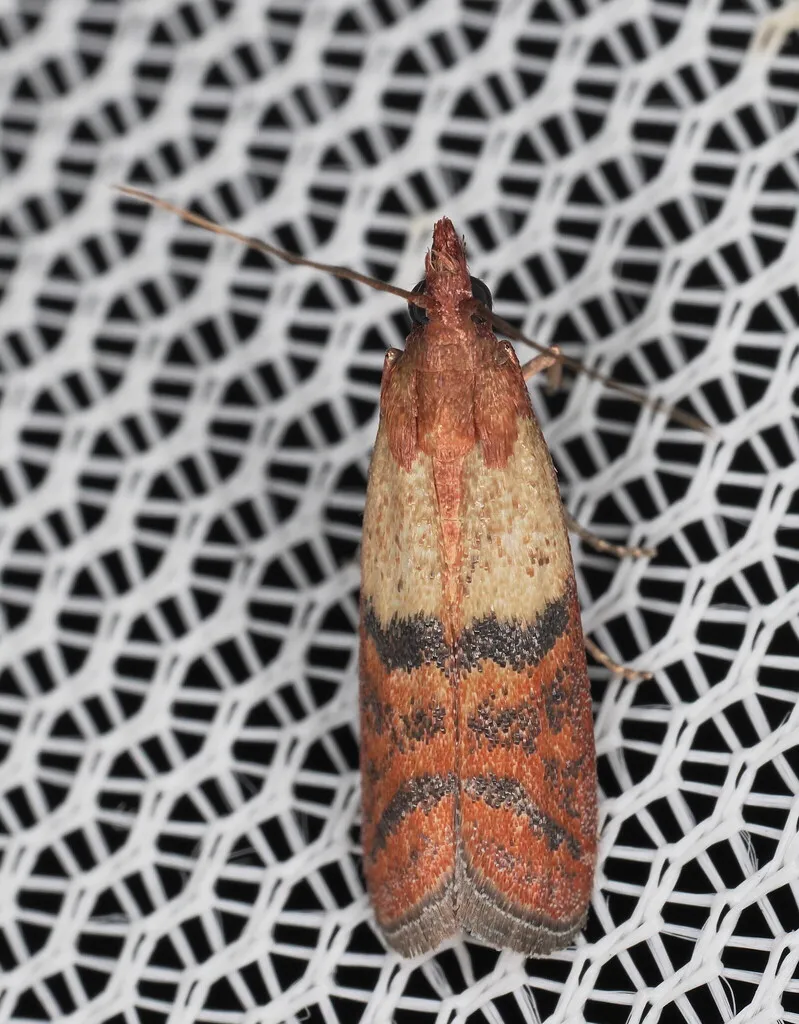
| Indian meal moth | Adult 8 to 10 mm; larva up to 12 mm | Adult: wings half pale, half copper; larva: off-white caterpillar with a brown head | Flour, rice, nuts, dried fruit, cereal, bird seed | Silk webbing, clumped food, small moths flying at night |
| Drugstore / cigarette beetle | 2 to 3.5 mm | Oval or humped, light brown | Spices, paprika, dried herbs, flour, pet food | Tiny holes in packaging, beetles on window sills |
| Flour mite | 0.3 to 0.5 mm | Pale, nearly invisible, looks like moving dust | Damp flour, grain, cereal | Fine "dust" that moves; minty or musty smell |
Weevils in rice
Rice weevils and the slightly larger maize weevil are the classic bugs in rice. They are the only pantry pests with a long, downward-curved snout. The female chews a hole in a single grain, lays an egg inside and seals it. The larva eats the grain from within and the adult chews its way out, so a bag can look clean for weeks and then suddenly be full of weevils. Each grain they leave has a neat round hole.
Rice weevils can fly and walk well, so they spread to other packages: check pasta, oats, dried beans, popcorn and bird seed too. Weevils do not live in flour (they need whole grains to develop), but adults wander through it. The tiny brown bugs guide covers the other small brown beetles you might find nearby.
Bugs in flour: flour beetles
The red flour beetle and the confused flour beetle are the most common bugs in flour. They are near-identical, 3 to 4 mm, flat and shiny reddish brown, with no snout. The difference is the antennae: in the red flour beetle the last three segments form a sudden club, while in the confused flour beetle the antennae thicken gradually (hence "confused"). For getting rid of them it makes no difference.
Flour beetles cannot chew into intact grain, so they live in flour, mixes, cereal and anything already broken or ground. A large population gives off chemicals that turn flour greyish and give it a sharp, unpleasant smell; at that point throw it out.
Sawtoothed grain beetle
Very slim and flat, 2.5 to 3 mm, with six tooth-like points along each side of the plate behind the head (you need a close-up to see them). Its flat body lets it get into packages through folds and gaps, so it turns up in boxes of cereal, oats, dried fruit and pet food that look sealed.
Worms in rice and moths in flour: Indian meal moth
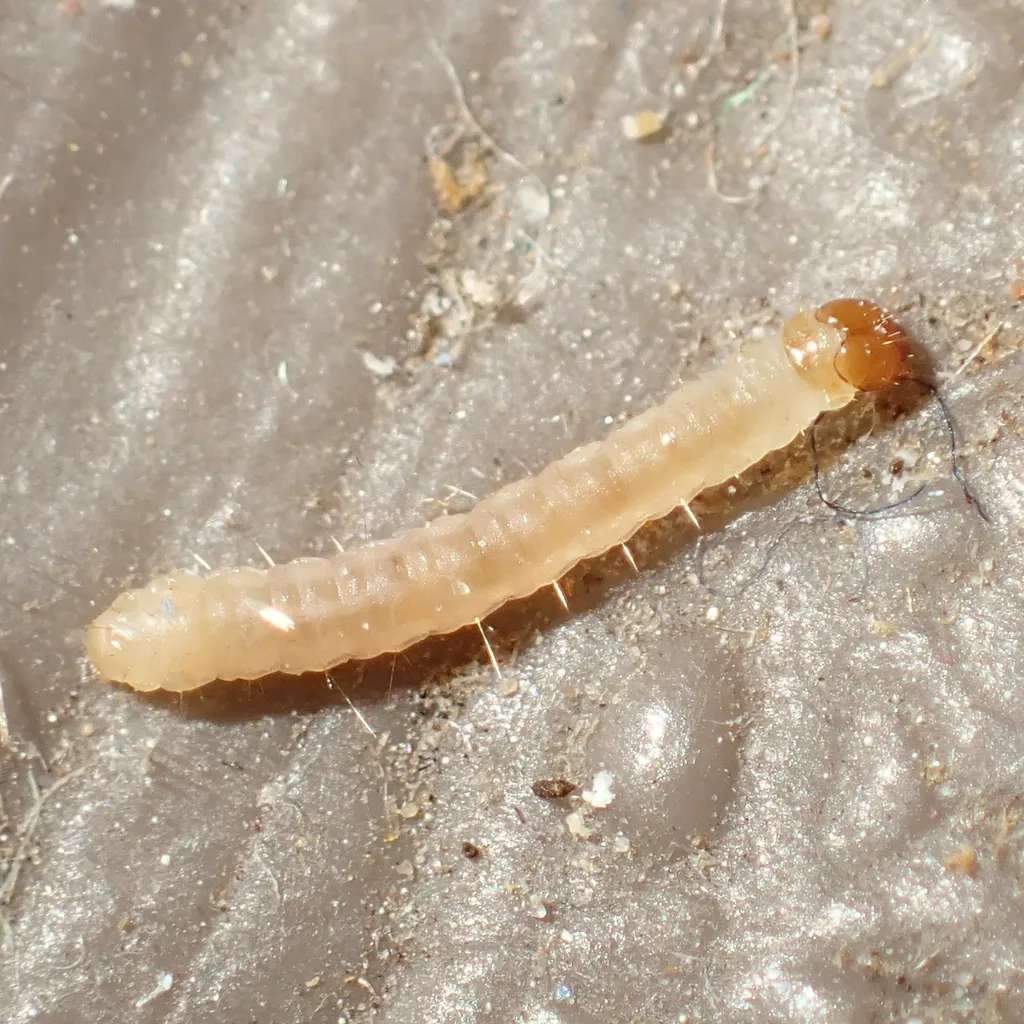
If you find worms in rice or flour, or silky threads that bind the food into clumps, it is almost always the larva of the Indian meal moth. The larvae are off-white caterpillars up to about 12 mm long with a brown head. When fully grown they leave the food to pupate, so you may also see them crawling up walls and onto the ceiling. The adults are small moths, 8 to 10 mm, whose folded wings are pale at the front and copper brown at the back. They flutter around the kitchen at night.
Indian meal moths infest the widest range of foods of any pantry pest: flour, rice, cereal, nuts, chocolate, dried fruit, pasta, spices, bird seed and dry pet food. Look for webbing in the corners of packages and along the shelf edges.
Flour mites: the "dust" that moves
Flour mites are 0.3 to 0.5 mm, pale and almost invisible one at a time. In numbers they look like a fine layer of moving dust on the surface of the flour, and the flour may smell minty or musty. They need damp food, so they are a sign the flour has picked up moisture. Handling heavily infested flour can cause an itchy rash ("grocer's itch") or allergy symptoms in some people. Throw it out and keep new flour somewhere dry.
Is it safe to eat flour or rice with bugs?
Eating a few weevils, beetles or larvae by accident is not known to make people ill: none of these insects carry disease. Food with a few insects can be sifted, or frozen and then sifted, if you choose to keep it.
Throw it out if the food is heavily infested, has webbing or clumps, smells sharp, musty or minty, looks damp or mouldy, or if anyone in the house has allergies or asthma. Flour mites and some flour beetle infestations can trigger allergic reactions. When in doubt, the cost of a new bag is less than the bother.
How to get rid of pantry bugs
- Empty the cupboard and check every dry food: flour, rice, pasta, oats, cereal, cake and pancake mixes, spices, nuts, dried fruit, chocolate, dried beans, pet food and bird seed. Look for live insects, holes, webbing and clumps.
- Bag and bin everything infested, sealed, outside the house.
- Vacuum the shelves, corners, cracks and shelf-pin holes, then empty the vacuum outside. Wipe with soapy water. Do not spray insecticide on food shelves.
- Freeze anything you want to keep and any new grain or flour you bring home: at least four days at -18 °C (0 °F) kills eggs and larvae.
- Store dry goods in airtight containers of glass, metal or hard plastic with tight lids. Paper bags, cardboard boxes and clip-sealed bags are no barrier.
- Use the oldest food first and buy smaller quantities so nothing sits for months.
- For moths, hang a pheromone trap near the pantry to see if any are left. Traps catch males and only monitor; the cleaning is what ends the problem.
Expect stragglers for two or three weeks, as insects that were already in cracks or pupating finish developing. If you still find them after a month, you have missed an infested package somewhere, often pet food, bird seed, dried flowers or a forgotten bag at the back of a cupboard.
Frequently Asked Questions
Why are there bugs in my flour or rice?
They almost always came in with a package: eggs or larvae were already in the flour or rice when you bought it, and they hatched on your shelf. Weevils and moths then spread to other packages.
Are rice weevils harmful?
No. Rice weevils do not bite, sting or carry disease, and they do not damage the house. They only spoil whole grains such as rice, pasta and corn.
What are the small worms in rice?
Usually Indian meal moth larvae: off-white caterpillars up to 12 mm long with a brown head, often with silk webbing. Weevil larvae are white and legless but live hidden inside single grains.
Is it safe to cook rice with weevils in it?
Eating a few cooked weevils by accident is not harmful. Many people rinse rice and pick off weevils that float. Throw it out if it is heavily infested or smells off.
How do I keep bugs out of flour and rice?
Freeze new flour and grain for four days, then store it in airtight glass, metal or hard plastic containers. Use the oldest food first and do not keep large stocks for many months.
Can I identify the bug in my pantry from a photo?
Yes. Take a close-up on a white background and upload it to the free bug identifier, or snap it with the Bug Identifier app, to get the species and what to do about it.

Identify any bug in seconds
Download Bug Identifier and get instant AI-powered identification with danger levels, species profiles, and safety information.

 Scan to get it on your iPhone