Tiny Brown Bugs in the House: 10 Usual Suspects, With Pictures
Tiny brown bugs in the kitchen, the bathroom, the bed or on the window sill are almost always pantry beetles, booklice, young cockroaches, bed bugs, carpet beetle larvae or fleas. Sort yours by where you found it, with photos, a size table and what to do about each.
Not sure what you found? Identify it from a photo, freeMost tiny brown bugs found indoors are one of ten species, and where you found it narrows the list to two or three. In or near food, it is almost always a pantry beetle (drugstore beetle, cigarette beetle, weevil or grain beetle). In a damp bathroom or among books, it is a booklouse. In the kitchen at night, a young German cockroach. In the bed, a bed bug until proven otherwise. On the carpet or the window sill, a carpet beetle larva or, in autumn, a stink bug that came in from outside.
Only two of the ten bite people: bed bugs and fleas. The rest are a food, damp or hygiene problem, not a health one.
The ten usual suspects
Sizes are body length without legs or antennae. A sesame seed is about 3 mm; an apple seed about 5 mm.
| Bug | Size | Look | Where you find it | Flies or jumps? | Bites? |
|---|---|---|---|---|---|
| Drugstore beetle | 2 to 3.5 mm | Oval, light to reddish brown, fine rows of grooves on the back | Pantry, pet food, spices, window sills | Flies, often to windows and lights | No |
| Cigarette beetle | 2 to 3 mm | Rounder and humped, smooth back, head tucked under | Spices, paprika, dried herbs, pet food, tobacco | Flies | No |
| Rice weevil | 2 to 3 mm | Slim, dark reddish brown, long snout, four faint pale spots | Rice, whole grain, pasta, dried corn | Flies | No |
| Sawtoothed grain beetle | 2.5 to 3 mm | Very slim and flat, six "teeth" on each side behind the head | Flour, cereal, oats, dried fruit, bird seed | Rarely | No |
| Spider beetle | 2 to 4 mm | Round shiny body on long legs, looks like a tiny spider | Pantry corners, attics, old stored food | No | No |
| Booklouse | 1 to 2 mm | Soft, pale tan, wingless, big head | Damp bathrooms, books, wallpaper, new houses, flour | No, runs fast | No |
| German cockroach nymph | 3 to 12 mm | Dark brown with a pale stripe down the middle, no wings | Kitchen and bathroom at night, behind appliances | No | No |
| Bed bug | 1.5 to 7 mm | Flat, oval, reddish brown, no wings | Mattress seams, bed frame, headboard | No | Yes, at night |
| Carpet beetle larva | 3 to 5 mm | Hairy, carrot-shaped, banded brown | Carpet edges, wardrobes, window sills, under furniture | No | No, but the hairs can cause a rash |
| Flea | 1.5 to 3 mm | Narrow, flattened side to side, reddish brown | Pet beds, carpets, on ankles | Jumps | Yes, ankles and lower legs |
The odd one out by size is the brown marmorated stink bug, about 17 mm long and shaped like a shield. It is not tiny, but it is the "brown bug in the house" of autumn in the US and parts of Europe, and it gets its own section below.
Pictures of the most common tiny brown bugs
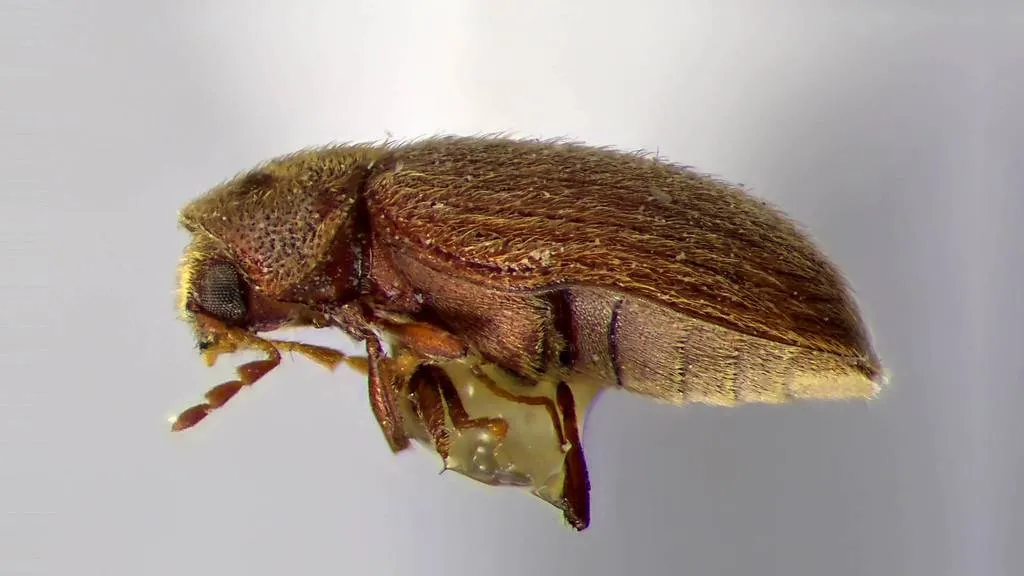
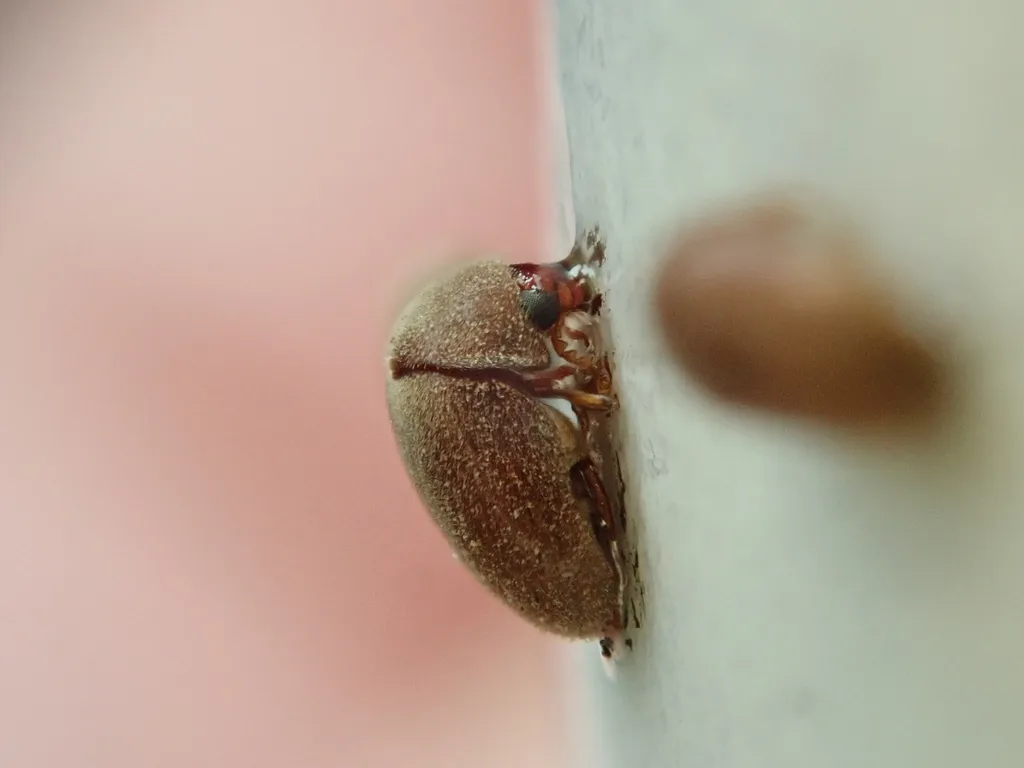
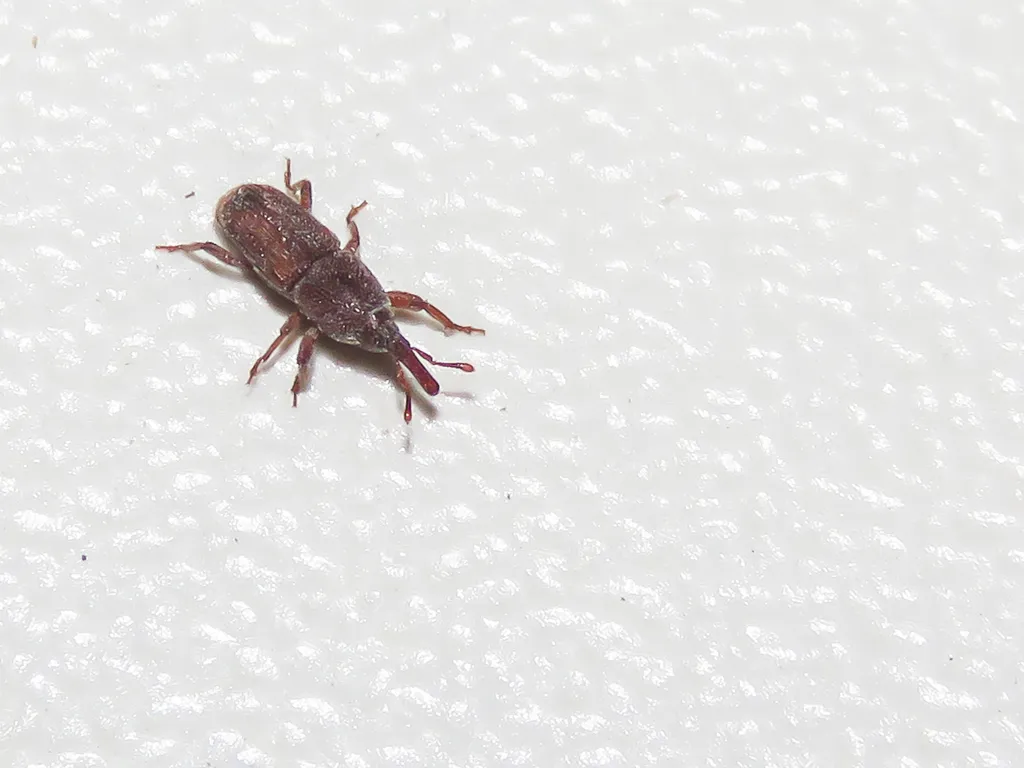
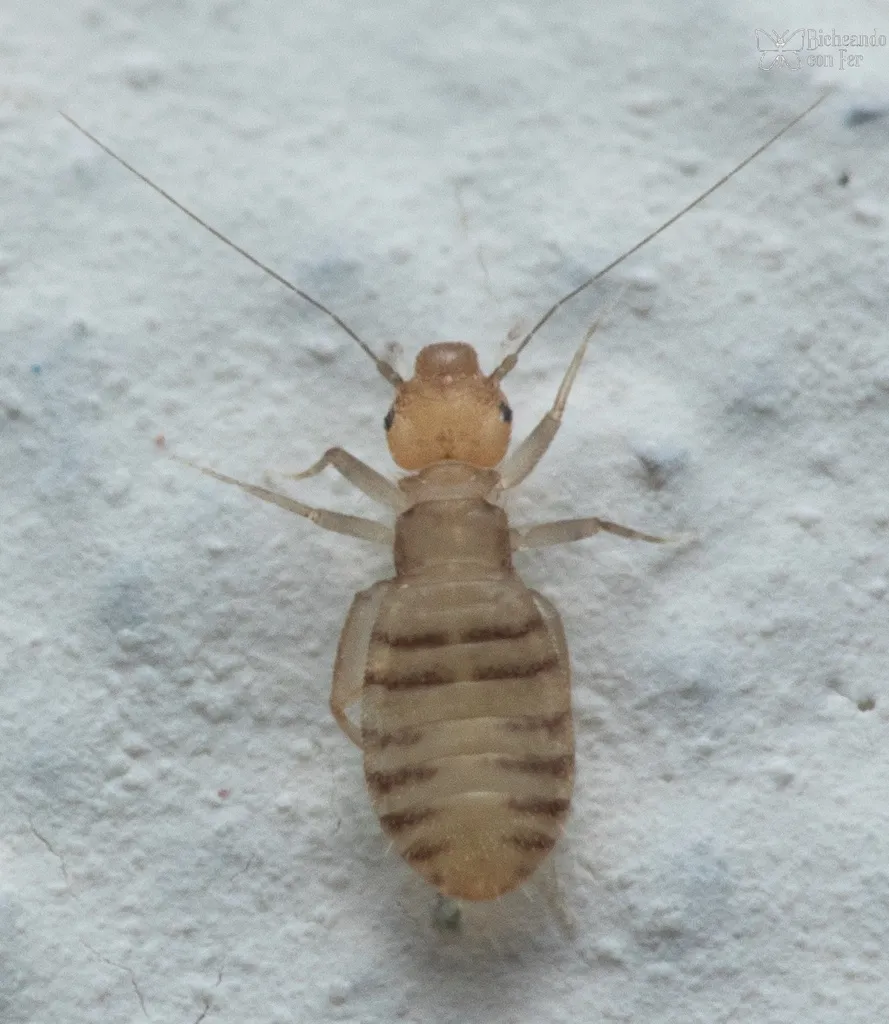
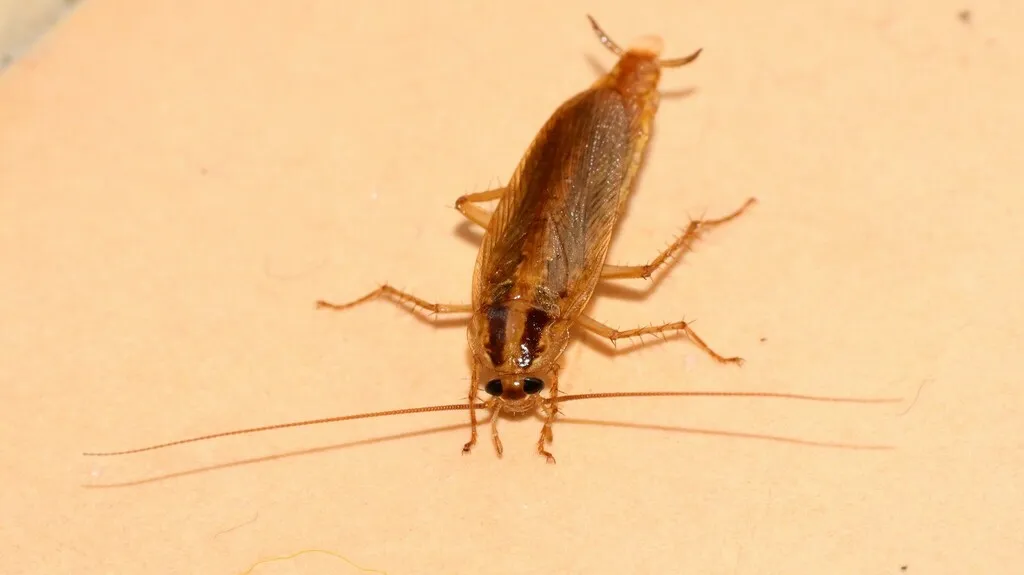
For bed bugs at every size, from pale nymphs to fed adults, see our bed bug pictures. For more roach nymphs side by side, see pictures of roaches for identification.
Sort it by where you found it
In the kitchen or pantry, near food. Beetles that fly to the window are drugstore or cigarette beetles; one with a snout is a weevil; a very slim flat one in flour or cereal is a sawtoothed grain beetle. A round one on long legs in a corner is a spider beetle. All of them breed in a single forgotten package: an old bag of dog food, a spice jar from three years ago, a box of cereal at the back of the shelf, a dried flower arrangement. Small moths flying in the kitchen point to the same problem; their caterpillars are the Indian meal moth. Bugs in flour and rice shows each pantry pest and how to clear the cupboard.
In the bathroom. Booklice, if they are pale, wingless and fast on a damp wall or windowsill (if yours look more white than brown, or jump, see tiny white bugs in the house). A dark brown bug with a pale stripe that runs from the light is a German cockroach nymph. Fuzzy moth-like flies by the drain are drain flies, covered in our guide to tiny black bugs in the house.
In or near the bed. Check for bed bugs first: flat, oval, apple-seed sized adults, smaller pale nymphs, and dark specks or shed skins along the mattress seams. Fleas jump; bed bugs do not. A slow, hairy, banded larva in a bedroom is a carpet beetle larva, not a bed bug.
On the carpet, in wardrobes, on window sills. Hairy larvae and the empty skins they leave are carpet beetles; see carpet beetles for the adults and the damage. Drugstore beetles also end up on sills, because they fly to light.
On walls and windows in autumn. A large shield-shaped brown bug is a brown marmorated stink bug looking for a place to spend the winter.
Tiny brown bugs that fly
Drugstore beetles, cigarette beetles and rice weevils all fly, and the first two are the usual "small brown flying bugs" at a kitchen window. Indian meal moths are about 1 cm long with copper-tipped wings and fly in zigzags at dusk. In spring, a swarm of brown winged insects from a wall or floor is either flying ants or termite swarmers: ants have a pinched waist and bent antennae, termites a thick waist and four wings of equal length that they shed in piles. Termites need a professional inspection; the others need a pantry clear-out.
Tiny brown bugs that bite
Only two from the list. Bed bug bites appear in lines or clusters on skin that was exposed in bed (arms, neck, shoulders) and turn up after nights at home. Flea bites are small, very itchy and mostly around the ankles and lower legs, usually with a pet in the house. Carpet beetle larvae cause a rash that looks like bites, but they do not bite; their hairs irritate. If you have bites and no visible bug, what bit me sorts them by pattern.
The big brown bug of autumn: stink bugs
The brown marmorated stink bug is about 17 mm long, almost as wide as it is long, mottled brown, with pale bands on the antennae and a banded edge to the abdomen. From September to October it gathers on sunny house walls and slips in through gaps around windows, siding and pipes to overwinter. Indoors it does not breed, bite people or damage anything, but it smells when crushed or vacuumed in numbers, and the odour can trigger allergic symptoms in some people.
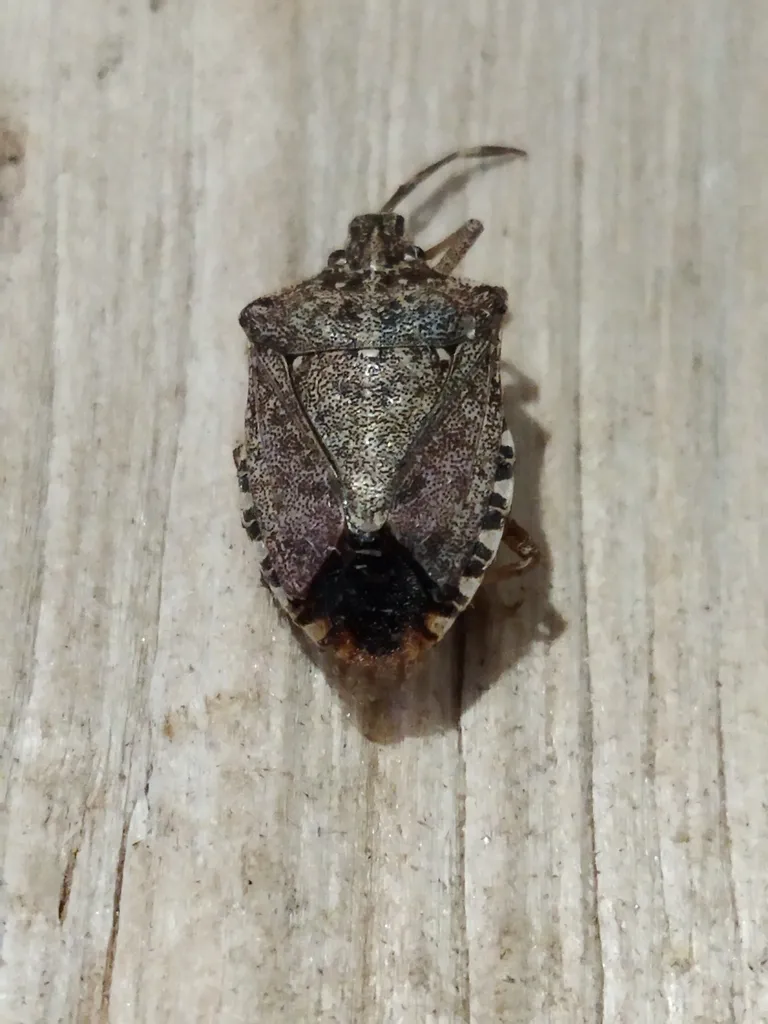
Seal gaps with silicone caulk before September, vacuum the ones that get in, and skip insecticides in wall voids and attics: dead bugs there feed carpet beetles. Boxelder bugs behave the same way but are black with red lines.
Still not sure? Get a clear photo
Catch the bug on clear tape or in a glass, put it on white paper, and photograph it from above as close as your phone will focus. Grooves on the back, a snout, a pinched waist or the number of legs decides most of these, and a photo shows them better than your eye does. Upload it to the free online bug identifier for a name in seconds, or let the Bug Identifier app identify it and tell you whether it bites.
What to do about each
- Pantry beetles and weevils. Find the source, not just the adults: check every dry food, including pet food, bird seed, spices, dried flowers and decorations made from seeds. Seal and throw out anything infested, vacuum the shelves and their cracks, and keep dry food in glass or hard plastic containers with tight lids, not bags. A week in the freezer kills all stages in a package you want to keep. Sprays do not help; the larvae live inside the food.
- Booklice. Lower the humidity. Keeping relative humidity below 50% with a dehumidifier, ventilation and fixing leaks stops the mould they eat, and they disappear with it. Pesticides are rarely needed.
- German cockroaches. Gel baits in cracks near the stove, fridge and sink work better than sprays; fix leaks and remove food at night. Many nymphs means an established colony, and a professional is worth calling.
- Bed bugs. Do not move the mattress to another room or spray it with household insecticide. Wash bedding hot, dry it on high, encase the mattress and call a professional. The bed bug identifier lists the signs to confirm first.
- Carpet beetle larvae. Vacuum edges, under furniture and wardrobe floors, wash or freeze affected wool, and look for the adults on window sills in spring.
- Fleas. Treat every pet with a vet-recommended product, wash pet bedding, vacuum daily for two weeks.
A note on region
The pantry beetles, booklice, German cockroach, bed bug and flea are found worldwide. In the UK the drugstore beetle is usually called the biscuit beetle. The brown marmorated stink bug is native to East Asia and established across the US and much of Europe; in Australia and New Zealand it is a quarantine pest, so report a suspected one to the biosecurity authority rather than vacuuming it up.
Frequently Asked Questions
What are the tiny brown bugs in my kitchen?
Usually drugstore beetles, cigarette beetles, weevils or sawtoothed grain beetles coming from an infested dry food. Check pet food, spices, flour, rice and cereal at the back of the cupboard. If the bug is wingless with a pale stripe down its back and appears at night, it is a young German cockroach.
Are tiny brown bugs dangerous?
Most are not. Pantry beetles, booklice, spider beetles and stink bugs do not bite or spread disease. Bed bugs and fleas bite, and cockroaches can contaminate food and trigger asthma, so those three are worth acting on quickly.
What are tiny brown bugs that look like fleas but do not jump?
Booklice if they are pale and in a damp room, bed bug nymphs if they are in the bed, or carpet beetle larvae if they are hairy and slow. Fleas always jump.
Why do I have tiny brown beetles on my window sill?
Drugstore and cigarette beetles fly toward light, so adults that hatched in a pantry item end up on the nearest window. Look for the source package in the kitchen, not near the window.
Do tiny brown bugs in the bathroom mean my house is dirty?
No. Booklice and most bathroom bugs mean moisture, not dirt. Ventilate, fix drips and run a dehumidifier; the bugs leave when the humidity drops below about 50%.
The short version
Near food, a pantry beetle: find and bin the infested package. In a damp room, booklice: dry the room. In the kitchen at night, a cockroach nymph: bait and call a professional if there are many. In the bed, check for bed bugs before anything else. In autumn on the walls, a stink bug that will leave in spring. If yours does not fit, photograph it and let Bug Identifier name it, or work through what bug is this by colour and size.

Identify any bug in seconds
Download Bug Identifier and get instant AI-powered identification with danger levels, species profiles, and safety information.

 Scan to get it on your iPhone