Bugs That Look Like Bed Bugs: 9 Lookalikes and How to Tell Them Apart
Most bugs mistaken for bed bugs are carpet beetles, bat or swallow bugs, spider beetles, booklice, young cockroaches, fleas or ticks. Compare them by shape, legs, where you found them and whether they bite, with pictures.
Not sure what you found? Identify it from a photo, freeA bed bug is flat, oval, wingless, reddish brown, about 5 mm long (the size of an apple seed), with six legs and no hard shell over the back. If the bug you found is round and hard, has wings, jumps, has eight legs, or runs off fast on long legs, it is something else. The usual suspects are carpet beetles, bat bugs and swallow bugs, spider beetles, booklice, young German cockroaches, fleas and ticks.
Two of them, bat bugs and swallow bugs, are close relatives that look almost identical and will bite people. The rest are a different problem with a different fix, so it is worth getting right before you pay for a bed bug treatment.
Not sure? Put the bug on clear tape, take a sharp close-up and run it through the free bug identifier. It names the species and flags the lookalikes.
Quick comparison
Sizes are body length. A sesame seed is about 3 mm; an apple seed about 5 mm.
| Bug | Size | Shape and colour | Legs | Wings, jumps? | Bites people? | Where you find it |
|---|---|---|---|---|---|---|
| Bed bug | 4 to 7 mm adult, 1 to 4 mm young | Flat, oval, reddish brown; young are pale and translucent | 6 | No wings, no jumping | Yes, at night | Mattress seams, bed frame, headboard, sofa |
| Bat bug | 4 to 6 mm | Same as a bed bug, a little hairier | 6 | No | Yes, when bats leave | Near attics and walls with bat roosts |
| Swallow bug | 3 to 5 mm | Same shape, greyer, hairier | 6 | No | Occasionally | Near swallow nests under eaves, in spring |
| Carpet beetle (adult) | 2 to 3.5 mm | Round, hard, patchwork of white, brown and yellow scales | 6 | Flies to windows | No | Window sills, bed linen, carpet edges |
| Carpet beetle (larva) | 3 to 5 mm | Hairy, carrot-shaped, striped brown | 6 | No | No, but the hairs cause a rash | Carpet edges, under the bed, wardrobes |
| Spider beetle | 2 to 4 mm | Shiny round dome on long thin legs | 6 | No | No | Pantry, old stored food, bathrooms |
| Booklouse | 1 to 2 mm | Soft, pale tan, big head | 6 | No, runs fast | No | Damp rooms, books, mattresses in humid houses |
| German cockroach nymph | 3 to 12 mm | Long, dark brown with a pale stripe, long antennae | 6 | No, runs fast | No | Kitchen and bathroom at night |
| Flea | 1.5 to 3 mm | Narrow, flattened sideways | 6 | Jumps | Yes, ankles and legs | Pet beds, carpet, bedding pets sleep on |
| Tick | 1 to 5 mm unfed, up to 10 mm fed | Flat teardrop, swells grey when fed | 8 | No | Attaches and feeds for days | On skin or pets after outdoors |
How to check a suspected bed bug in 30 seconds
- Count the legs. Eight legs means a tick or a mite, not an insect. Six legs keeps bed bugs, beetles, booklice, cockroaches and fleas in play.
- Look at the back. A bed bug has no hard wing covers: you see short stubs of wing pads and a segmented, ribbed abdomen. Beetles have a hard, smooth or scaly shell that meets in a line down the middle.
- Watch it move. Bed bugs walk slowly. Fleas jump. Cockroach nymphs, booklice and spider beetles scurry.
- Squash it on white paper (if you can). A bed bug that has fed leaves a red-brown smear of blood. Beetles crunch and leave nothing red.
- Look where you found it. Bed bugs live where people sleep or sit for hours. A bug on a window sill, in the kitchen or in a cereal box is very unlikely to be one.
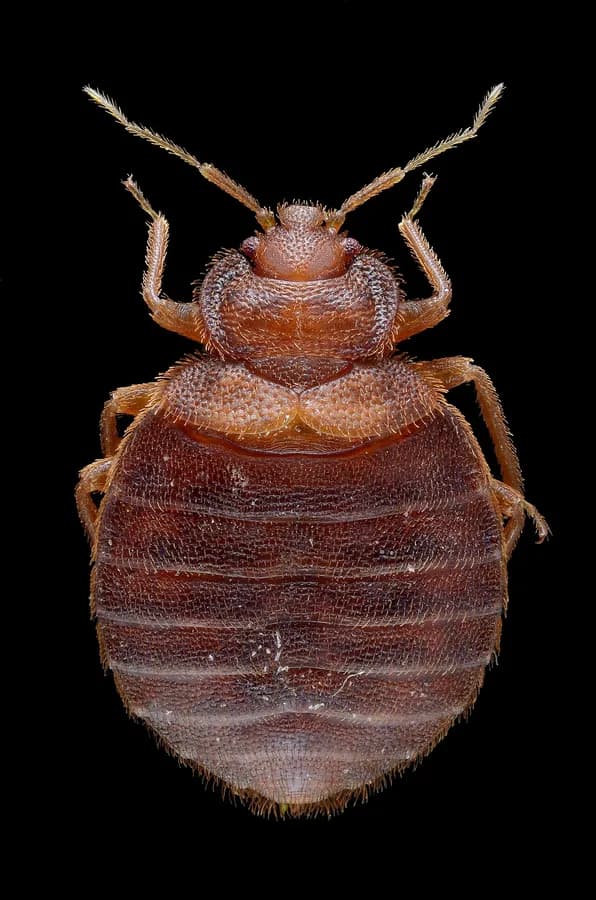

Bat bugs and swallow bugs: the true lookalikes
Bat bugs and swallow bugs are in the same family as bed bugs (Cimicidae) and look almost identical to the naked eye. The one reliable difference needs a hand lens or a macro photo: on a bat bug, the fringe of hairs on the plate behind the head is longer than the width of the eye; on a bed bug those hairs are shorter. Swallow bugs are a little greyer and hairier still.
Where you find them is the bigger clue. Bat bugs turn up near walls and ceilings below an attic or chimney where bats roost, often in late summer or after bats have been excluded and the bugs go looking for a new host. Swallow bugs come from cliff swallow or barn swallow nests under the eaves and wander indoors in spring, before the birds return.
Both will bite people if their real host is gone, but neither can breed for long on human blood alone. The fix is different too: remove the old roost or nest (legally, outside nesting season) and the problem ends, while a bed bug infestation needs treating where people sleep. That is why the distinction matters before you pay for a bed bug treatment.
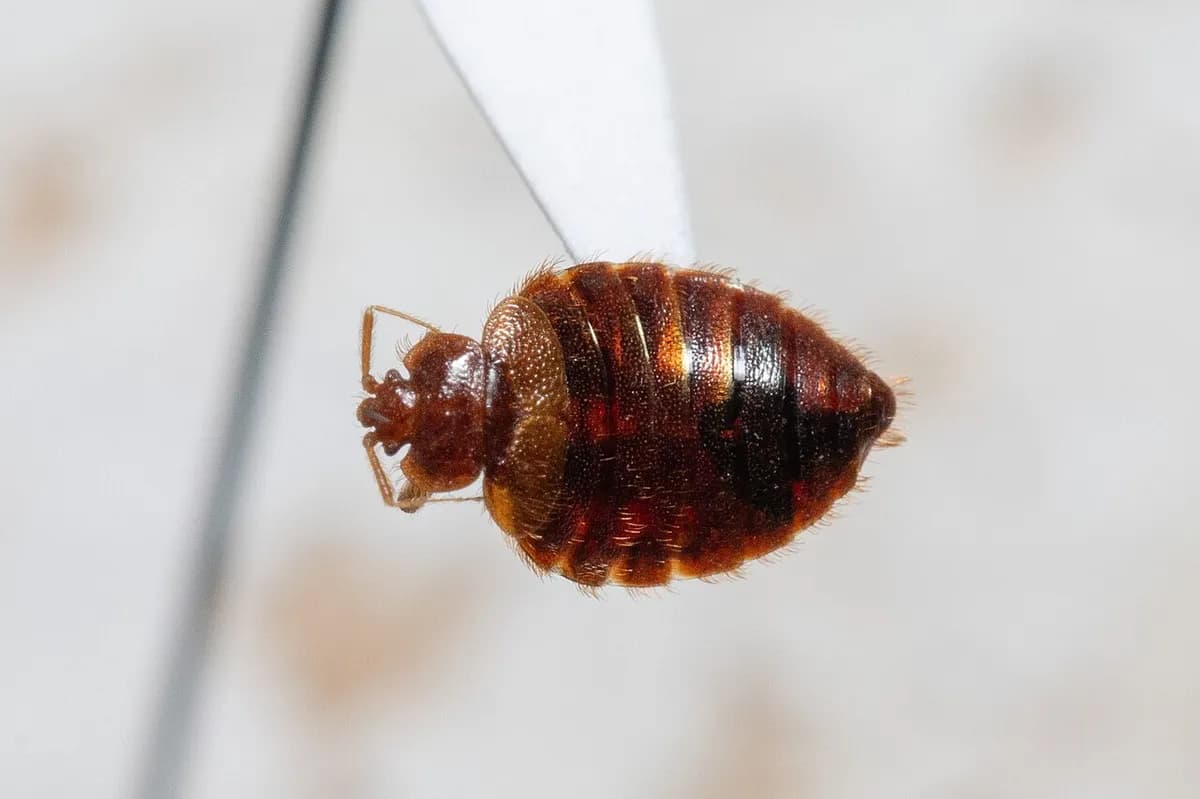

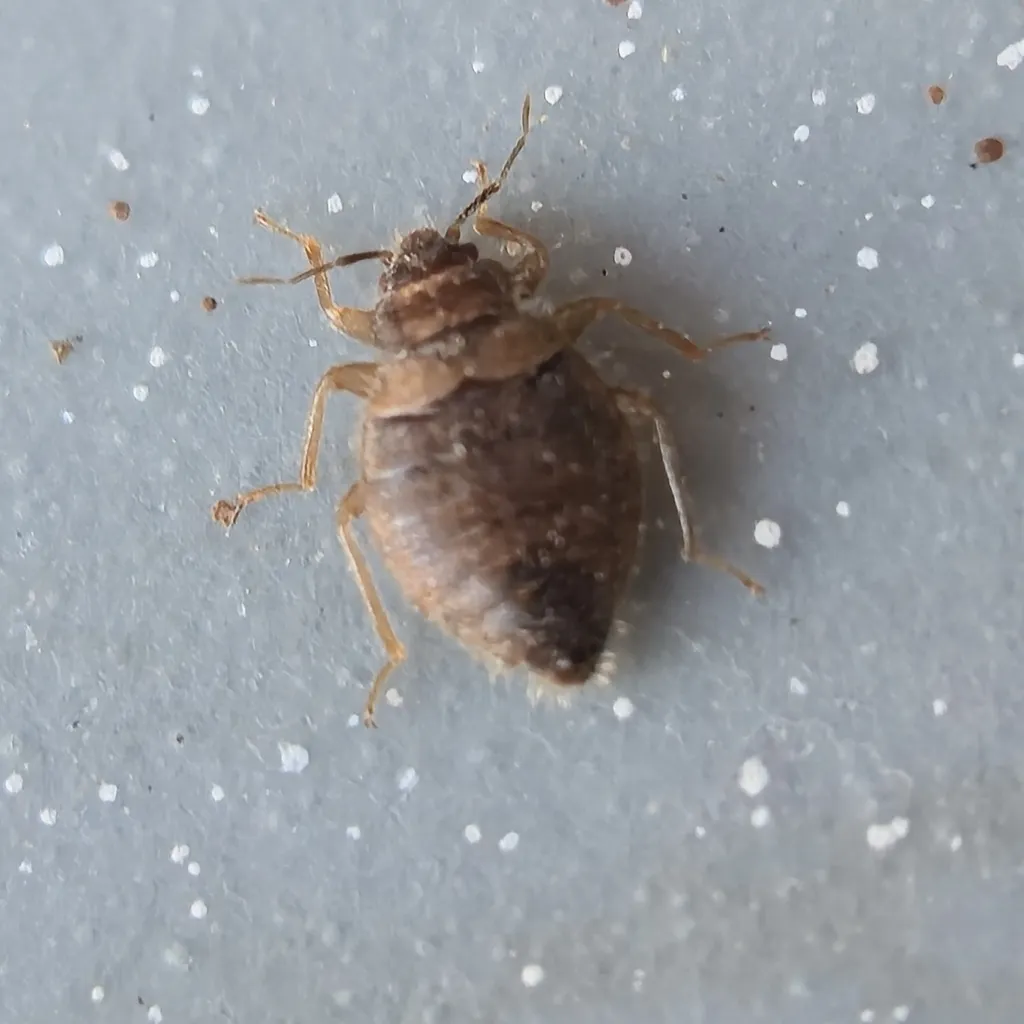
Carpet beetles: the most common mix-up
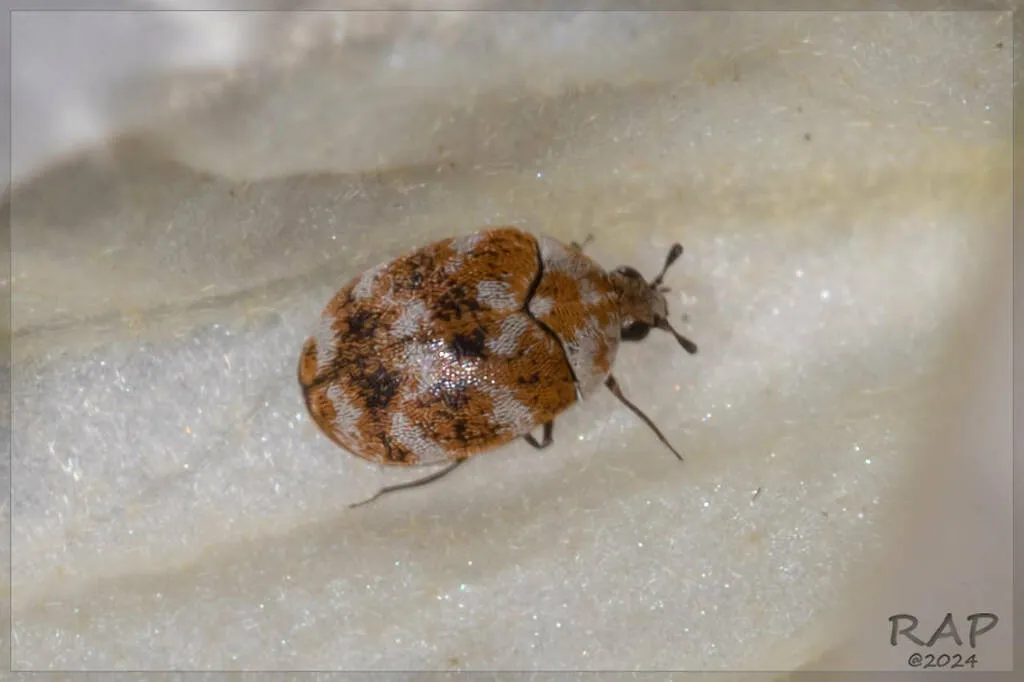
Adult carpet beetles are about half the size of an adult bed bug, round instead of flat, and covered in a hard patchwork of white, brown and yellow scales. They fly, and you mostly see them on window sills in spring. Their larvae are the ones found in beds: small, hairy, carrot-shaped and striped, often with shed skins nearby.
Carpet beetles do not bite, but the larvae's hairs cause an itchy rash in some people (carpet beetle dermatitis) that looks a lot like bed bug bites. If you have "bites" and only ever find hairy larvae or shed skins, read the carpet beetle guide before treating for bed bugs.
Spider beetles and booklice: tiny bugs in bed that are not bed bugs
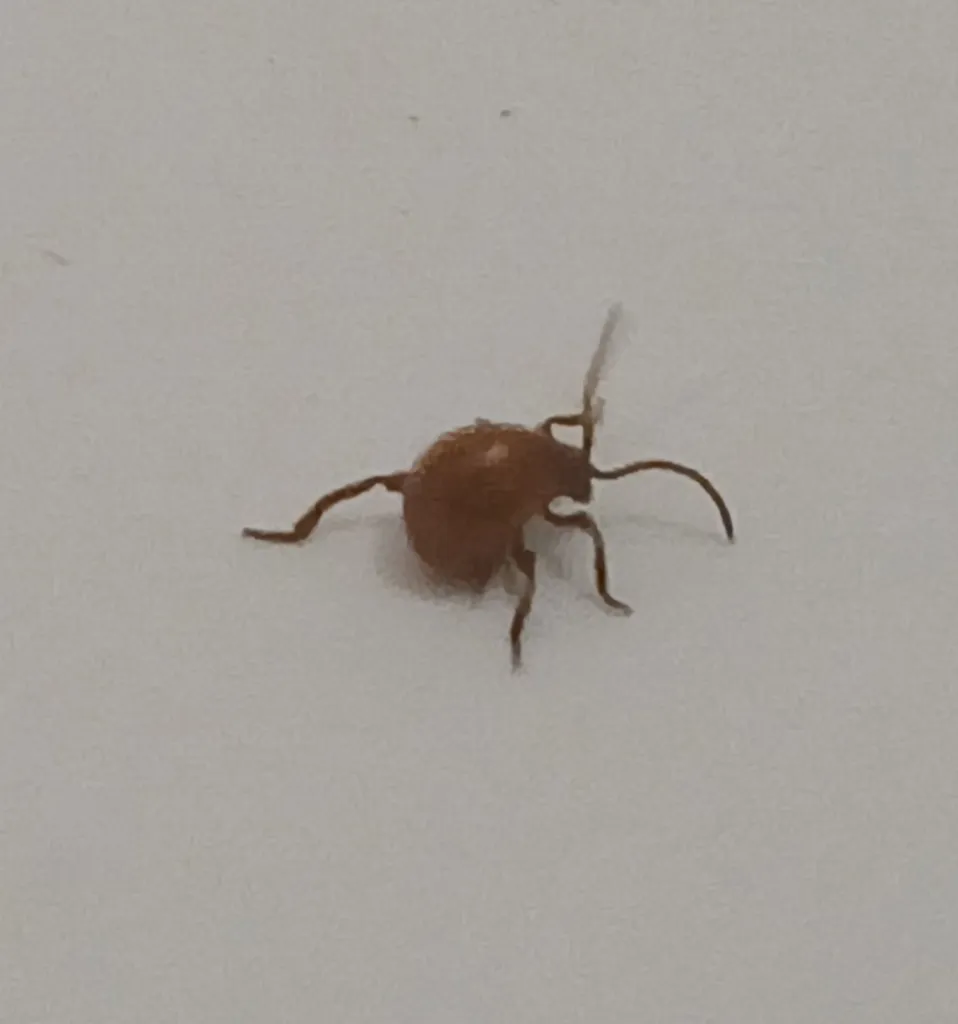
Spider beetles are shiny, round, reddish-brown domes on long legs, 2 to 4 mm long. From a distance they look like a fed bed bug nymph, but the body is hard and glossy and the legs are far longer. They feed on stored food, old grain and debris, and wander into bedrooms from the pantry or attic.
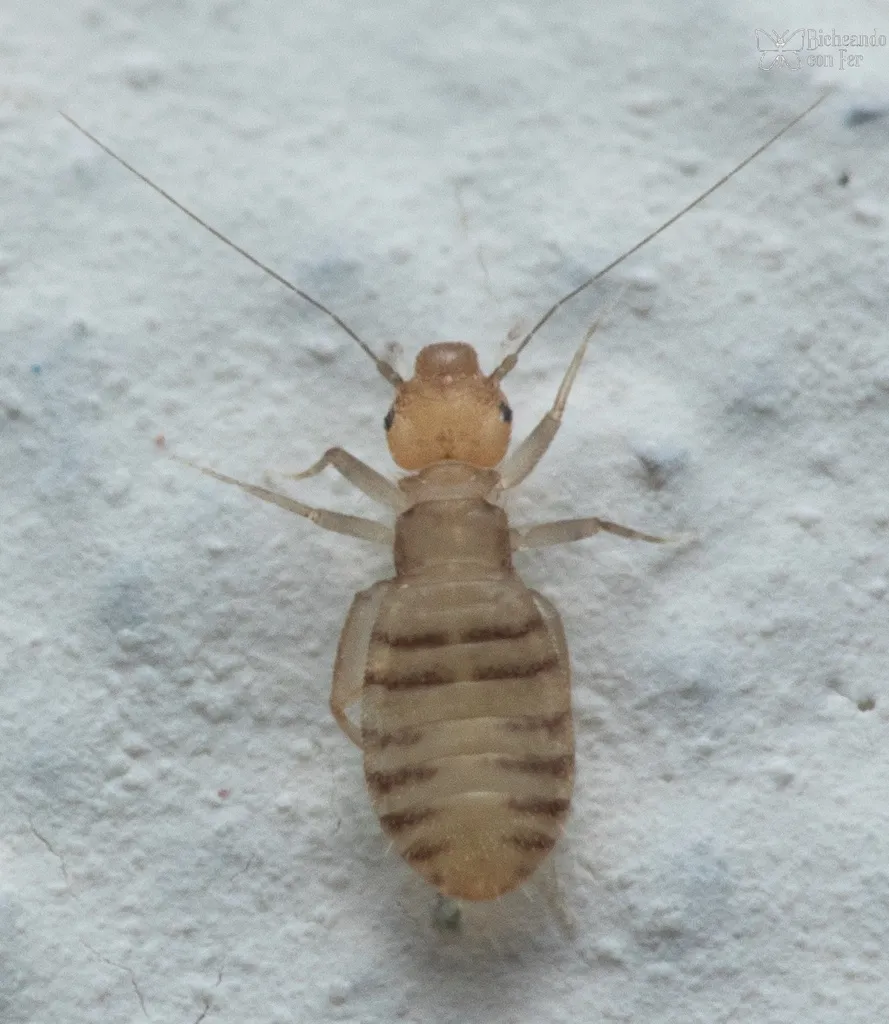
Booklice are 1 to 2 mm, soft and pale tan, and they move in quick bursts. They feed on mould, so they show up on mattresses, books and walls in damp or newly built houses. They do not bite. Lowering the humidity (a dehumidifier, airing the room) gets rid of them.
Young cockroaches
German cockroach nymphs are wingless, dark brown and small enough (from 3 mm) to pass for a bed bug at a glance. They are longer and narrower, have long antennae, a pale stripe down the back, and run fast toward cracks when the light goes on. They live near food and water, not in the bed. If the bug came from the kitchen or bathroom, see pictures of roaches for identification.
Tiny bugs in bed that jump: fleas
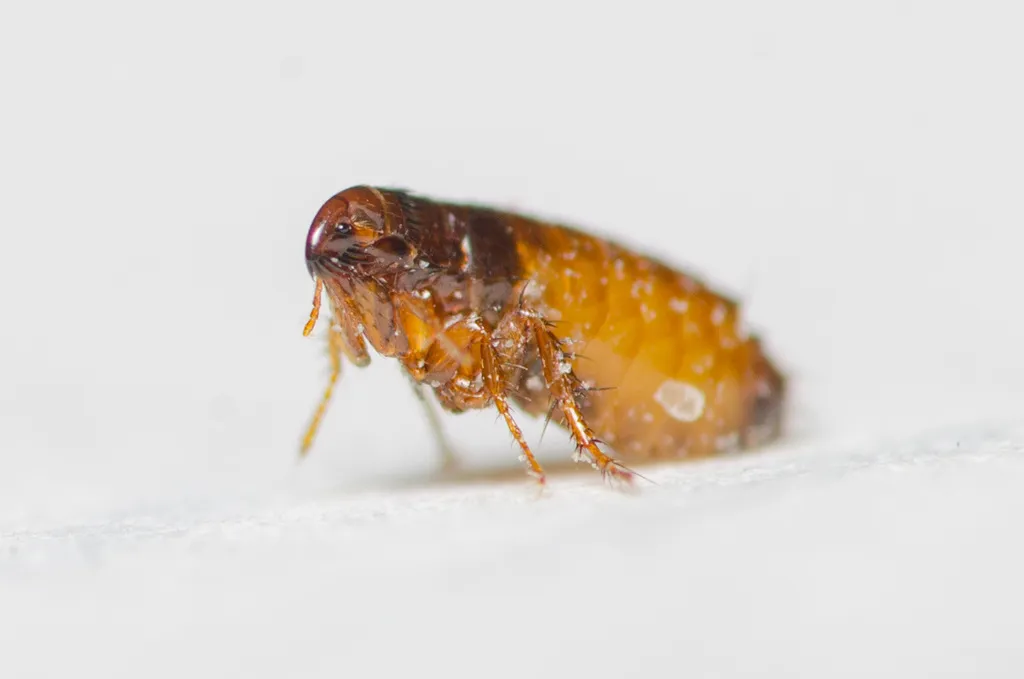
If it jumps, it is not a bed bug. Fleas are 1.5 to 3 mm, narrow and flattened from side to side, and live where pets sleep. Their bites cluster on the ankles and lower legs, while bed bug bites land on whatever skin was uncovered in bed: arms, shoulders, neck and face. Flea bites on humans has bite pictures. Springtails, which are pale grey and also jump, turn up in damp bathrooms and do not bite at all.
Ticks
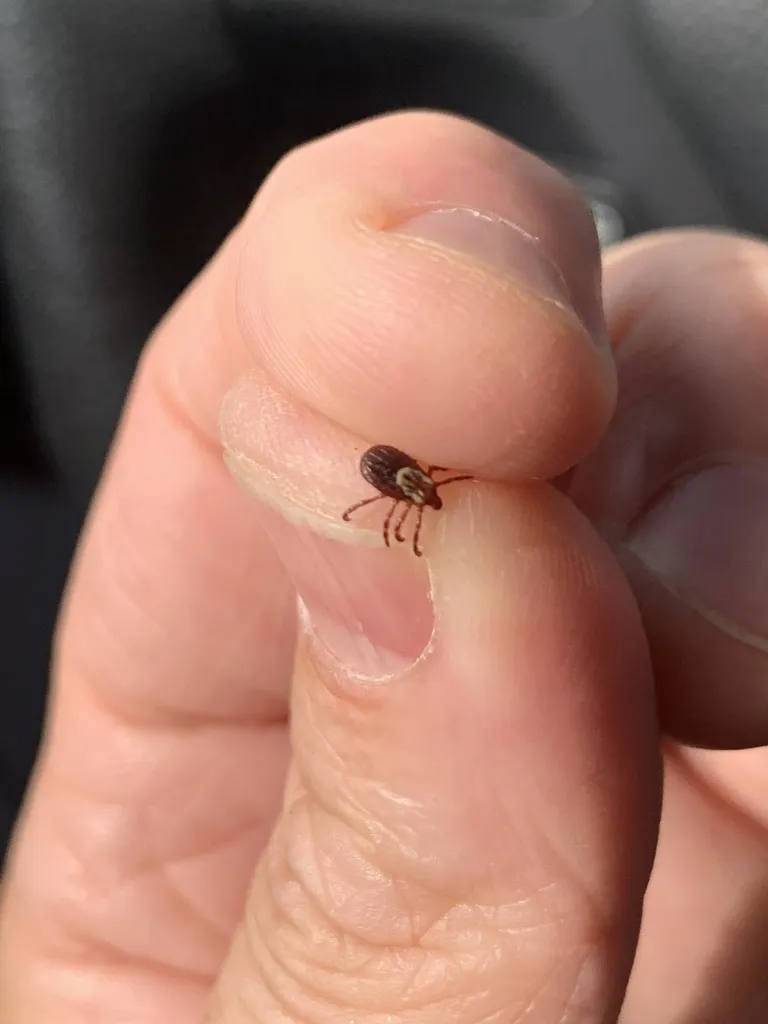
An unfed tick is flat, reddish brown and teardrop-shaped, so it is easy to mistake one crawling on a sheet for a bed bug. Count the legs: ticks have eight. A tick that has fed swells into a grey, bean-shaped blob, which a bed bug never does. Ticks come in on pets and clothes after time outdoors and attach for days; a bed bug feeds for a few minutes and leaves. Remove an attached tick with fine tweezers close to the skin.
I found one bed bug but no others: what now?
One confirmed bed bug does not always mean an infestation. It may have hitchhiked in on a bag, a coat or second-hand furniture. It also may be the first sign of a young one, which is the easiest kind to deal with. In the next two weeks:
- Keep the bug on clear tape or in a sealed bag. A pest professional can confirm it's a bed bug and not a bat bug, carpet beetle or booklouse.
- Inspect closely with a torch and a card: mattress seams and labels, the box spring, the bed frame joints, the headboard and the sofa you sleep on. Look for tiny black ink-like spots, pale shed skins and 1 mm white eggs. Bed bug pictures shows each sign.
- Put interceptor cups under the bed legs and pull the bed away from the wall so nothing can climb up another way.
- Wash and dry bedding and clothes from that room on the hottest dryer setting for at least 30 minutes.
- Watch for bites in rows or clusters on uncovered skin.
If nothing turns up in two weeks of interceptors and checks, you likely caught it early. If you find more bugs, eggs or spotting, call a professional. Over-the-counter foggers do not reach where bed bugs hide.
Frequently Asked Questions
What bugs are mistaken for bed bugs the most?
Carpet beetles (adults and larvae), bat bugs, spider beetles, booklice, German cockroach nymphs, fleas and ticks. Bat bugs and swallow bugs look nearly identical to bed bugs; the others differ in shape, legs or movement once you look closely.
What tiny bugs in bed are not bed bugs?
In beds, the common non-bed-bug finds are carpet beetle larvae (hairy and striped), booklice (pale, 1 to 2 mm, damp rooms), fleas (jump, from pets), springtails (jump, damp) and spider beetles (shiny round domes on long legs).
How do I tell a bat bug from a bed bug?
Under magnification, a bat bug's hairs on the plate behind the head are longer than the width of its eye; a bed bug's are shorter. Without a lens, location is the best clue: bat bugs appear near walls and ceilings below a bat roost.
Can carpet beetles bite like bed bugs?
No. Carpet beetles do not bite, but the hairs of their larvae can cause an itchy, bumpy rash that looks like bites. Finding hairy larvae or shed skins and no blood spots points to carpet beetles.
What is a bug that looks like a bed bug but jumps?
A flea, or in damp rooms a springtail. Bed bugs cannot jump or fly.
Is there a free way to identify a bug from a photo?
Yes. Upload a clear close-up to the free bug identifier for the species name and its lookalikes, or use the Bug Identifier app to snap it directly with your phone camera.

Identify any bug in seconds
Download Bug Identifier and get instant AI-powered identification with danger levels, species profiles, and safety information.

 Scan to get it on your iPhone