Spiders That Look Like a Brown Recluse: Wolf, Hobo, Grass and House Spiders Compared
Most brown spiders people send in as a brown recluse are wolf spiders, southern house spiders, grass spiders, hobo spiders, funnel weavers or cellar spiders. Use the eyes, the leg colour and the abdomen to tell them apart, with pictures and a comparison table.
Not sure what you found? Identify it from a photo, freeA brown recluse has six eyes in three pairs, a dark violin shape on the front of its body with the neck of the violin pointing back, plain legs with no bands, stripes or spines, and a plain, evenly coloured abdomen with no pattern. The body is 6 to 12 mm long, roughly the size of a US quarter with legs spread. Miss any one of those and it is not a recluse. The brown spiders most often mistaken for one are wolf spiders, southern house spiders, grass spiders, hobo spiders, barn funnel weavers and cellar spiders.
Location matters as much as looks. The brown recluse lives in the south-central and midwestern United States, roughly from Nebraska, Iowa, Illinois and Ohio south to Texas, Louisiana and Georgia. Outside that range, including California, the Pacific Northwest, the Northeast, the UK and Australia, a brown spider in the house is almost certainly something else. Arachnologists who have checked thousands of "recluse" submissions from outside the range find almost none.
If you have the spider, or a clear photo of it, the free spider identifier will name it and say whether it is dangerous.
Brown recluse vs the lookalikes at a glance
| Spider | Body size | Eyes | Legs | Abdomen | Violin mark? | Where |
|---|---|---|---|---|---|---|
| Brown recluse | 6 to 12 mm | 6, in three pairs | Plain tan, fine hairs, no spines or bands | Plain tan to grey-brown, no pattern | Yes, dark, neck points back | Closets, boxes, attics, basements; south-central US |
| Wolf spider | 5 to 35 mm | 8, two large in the middle row | Hairy, often banded, spiny | Striped, spotted or mottled | No; dark and light stripes instead | Floors, basements, garages; worldwide |
| Southern house spider (male) | 8 to 10 mm | 8, clustered | Long, plain tan | Plain grey-brown | Can show a darker patch, but no true violin | Corners, window frames; southern US |
| Grass spider | 10 to 20 mm | 8 | Banded, spiny | Striped, with two long spinnerets at the tip | No; two dark stripes on the front | Funnel webs in lawns and shrubs, garages in autumn |
| Hobo spider | 7 to 14 mm | 8 | Plain brown | Herringbone chevrons | No | Pacific Northwest, Europe; basements and window wells |
| Barn funnel weaver | 7 to 11 mm | 8 | Banded | Mottled chevrons | No | Basements, garages, sheds; worldwide |
| Cellar spider | 2 to 10 mm | 8 (or 6 in some) | Very long and thin | Long, pale grey | No | Ceiling corners, messy webs, wobbles when touched |
The three checks that settle it
1. The eyes. This is the most reliable check, and a phone macro shot is enough to see it. A brown recluse has six eyes arranged in three pairs, one pair in front and one at each side, in a shallow curve. Almost every other spider in the house has eight. Wolf spiders are the easiest to rule out: two big eyes stare forward from the middle row and shine green in a torch beam at night.
2. The legs. Recluse legs are one plain colour, long and thin, with fine hairs but no visible spines. Banded legs, striped legs, or stiff black spines sticking out of the legs mean it is not a recluse. Wolf, grass, hobo and funnel weaver spiders all fail this check.
3. The abdomen. A recluse abdomen is one plain colour with very fine short hairs, like suede. Any pattern of stripes, spots or chevrons rules it out.
The violin is useful only after these three. Many brown spiders have a darker area on the front of the body that looks like a violin at a glance, and young recluses can have a faint one.
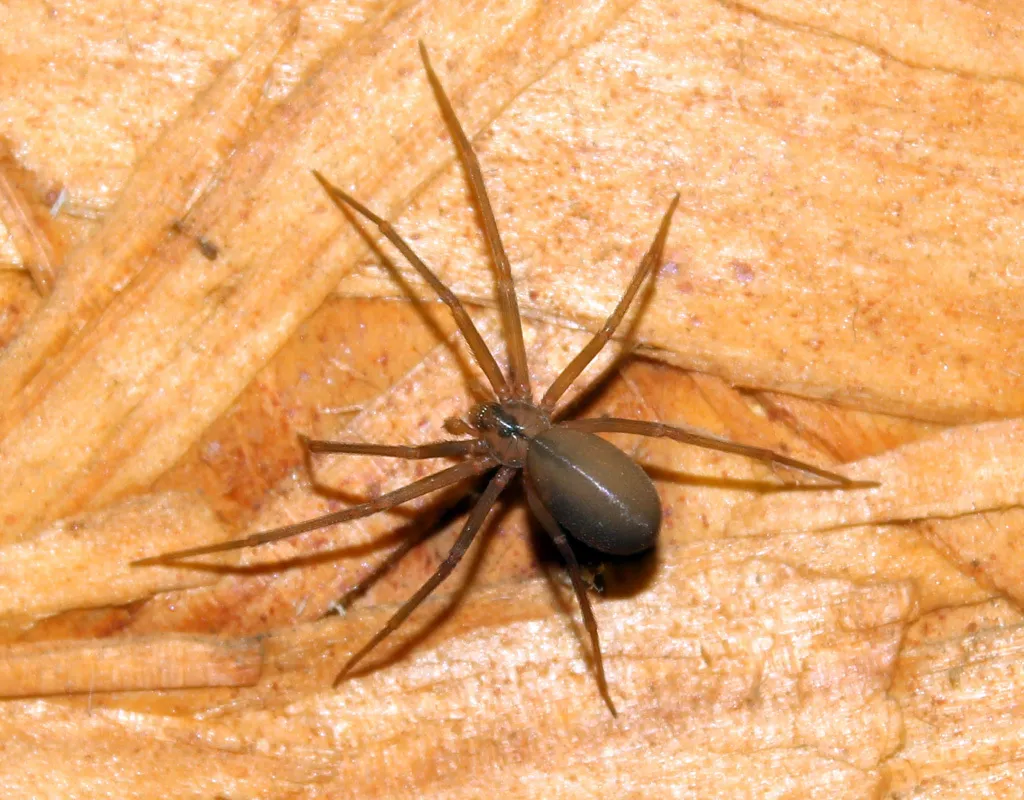
Wolf spider vs brown recluse
This is the most common mix-up, because both are brown, hunt on the floor at night and turn up in basements. The common house-invading wolf spiders are usually bigger and heavier, with a body of 10 to 35 mm and thick hairy legs, where a recluse is slender. Wolf spiders have stripes running lengthwise down the front of the body and often a pattern on the abdomen. Their eyes are the giveaway: eight, with two large ones facing forward, where a recluse has six small ones.
A female wolf spider carrying a round white egg sac on her spinnerets, or a crowd of spiderlings on her back, can only be a wolf spider. Wolf spiders can bite if handled, but the bite is like a bee sting and is not medically significant.
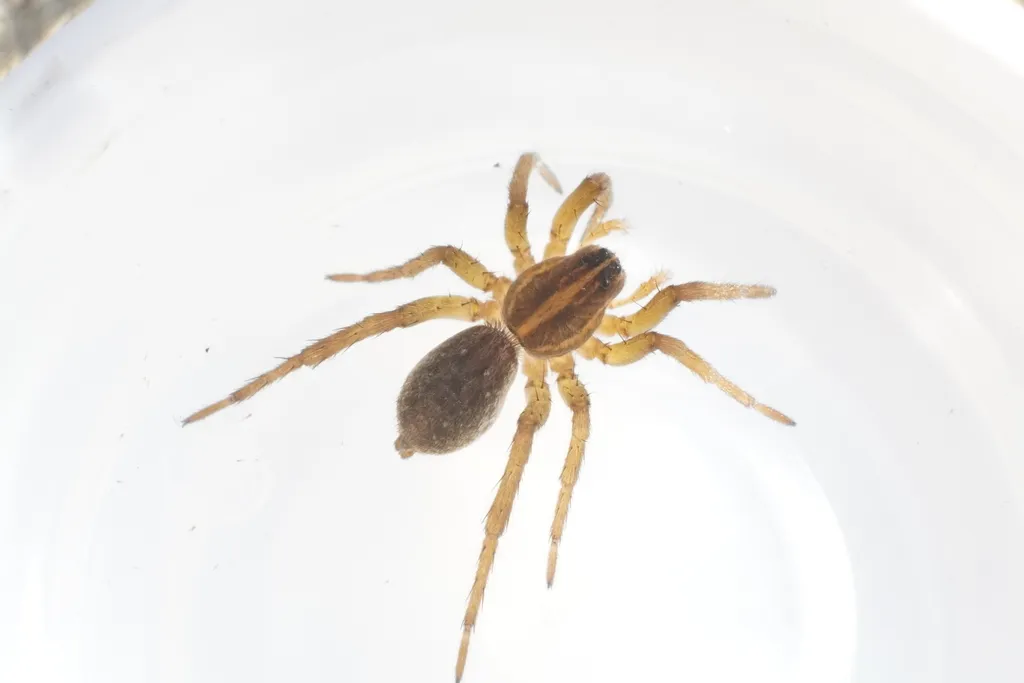
Southern house spider vs brown recluse
Male southern house spiders (Kukulcania hibernalis) are the lookalike that fools even pest professionals in the southern US. They are tan, slender and long-legged, with a darker area on the front of the body. Look for the palps, the leg-like parts beside the mouth, which are long and held out in front like an extra pair of short legs. Their eight eyes sit in a tight cluster on a small bump. Females are dark grey to black and build flat, fuzzy webs around cracks in walls and window frames, so they are rarely confused with a recluse.
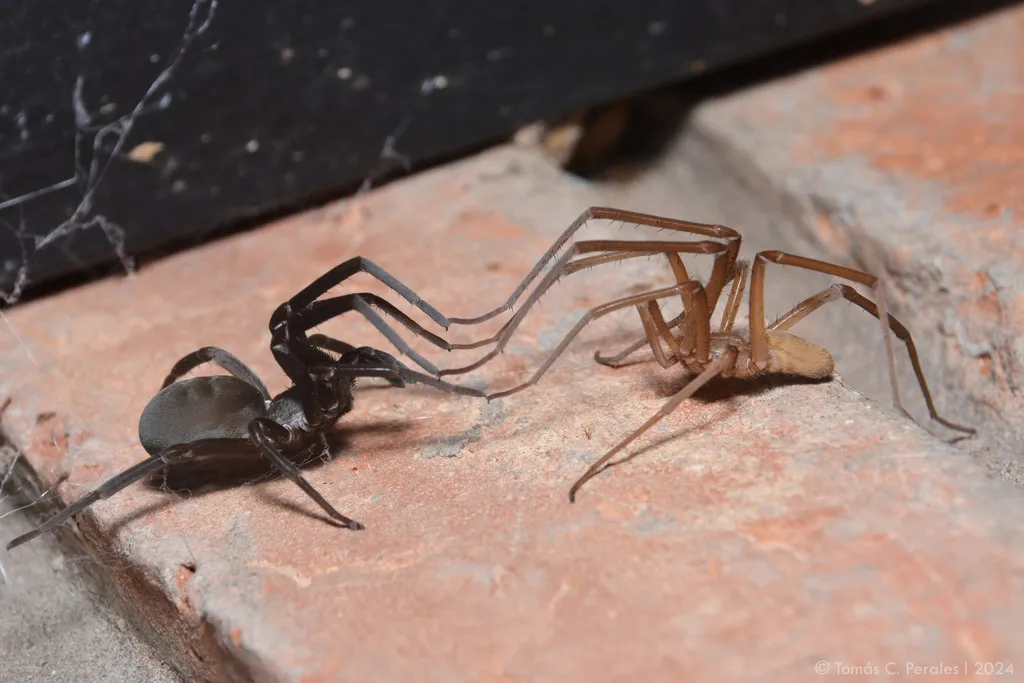
Grass spider vs brown recluse
Grass spiders (Agelenopsis) build sheet webs with a funnel at one side in lawns, shrubs and the corners of garages. In autumn the males wander indoors looking for females, which is when they get mistaken for recluses. They have two dark stripes running down the front of the body, a striped abdomen, banded spiny legs, and two long spinnerets sticking out of the back of the abdomen like a short tail. They run very fast.
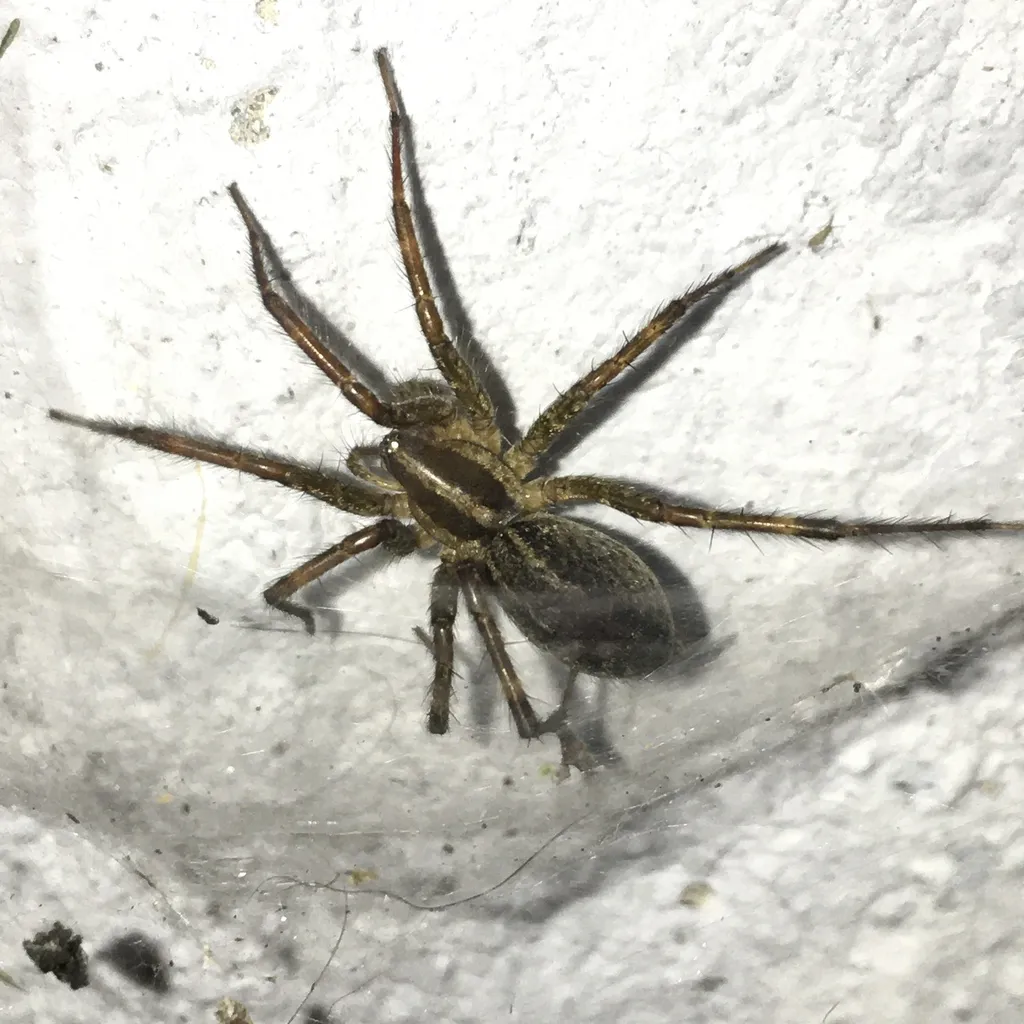
Hobo spider vs brown recluse
Hobo spiders (Eratigena agrestis) live in Europe and, in North America, mainly the Pacific Northwest, which barely overlaps the brown recluse range. They are brown with plain legs, but the abdomen carries a herringbone of chevrons pointing toward the front, and they have eight eyes. The hobo spider was once blamed for necrotic bites, but later studies did not support that, and the CDC removed it from its list of medically important spiders.
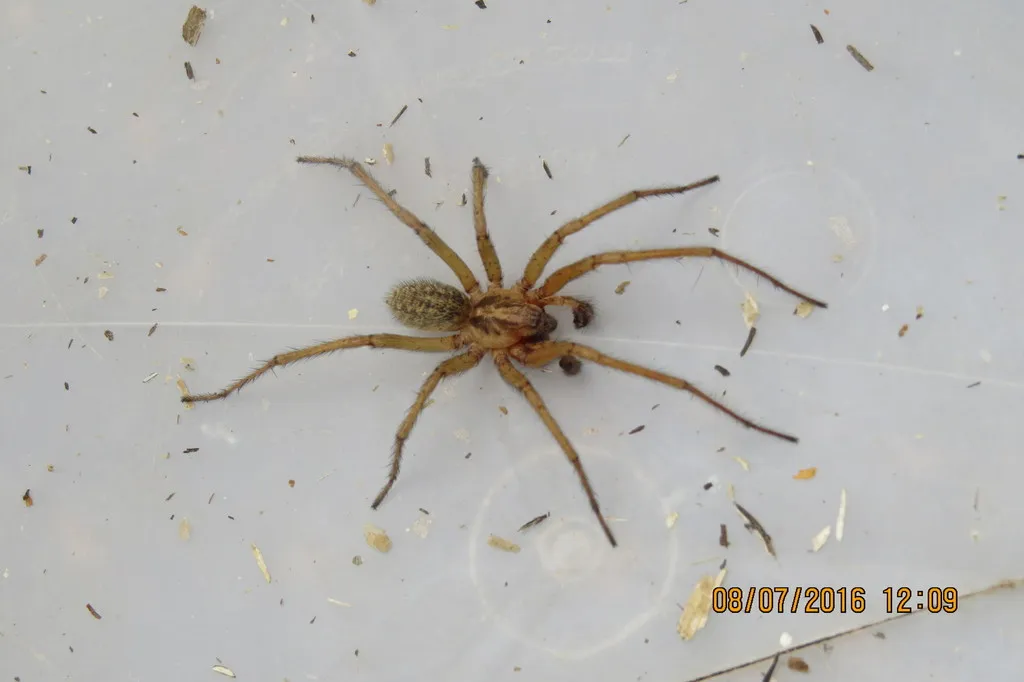
Barn funnel weaver and giant house spiders
The barn funnel weaver (Tegenaria domestica) and, in Europe and the Pacific Northwest, the much bigger giant house spider (Eratigena atrica) are the brown spiders that run across living-room floors in autumn. Both have banded legs, a mottled abdomen with chevrons and eight eyes, and build flat sheet webs with a funnel in corners of basements, sheds and garages.
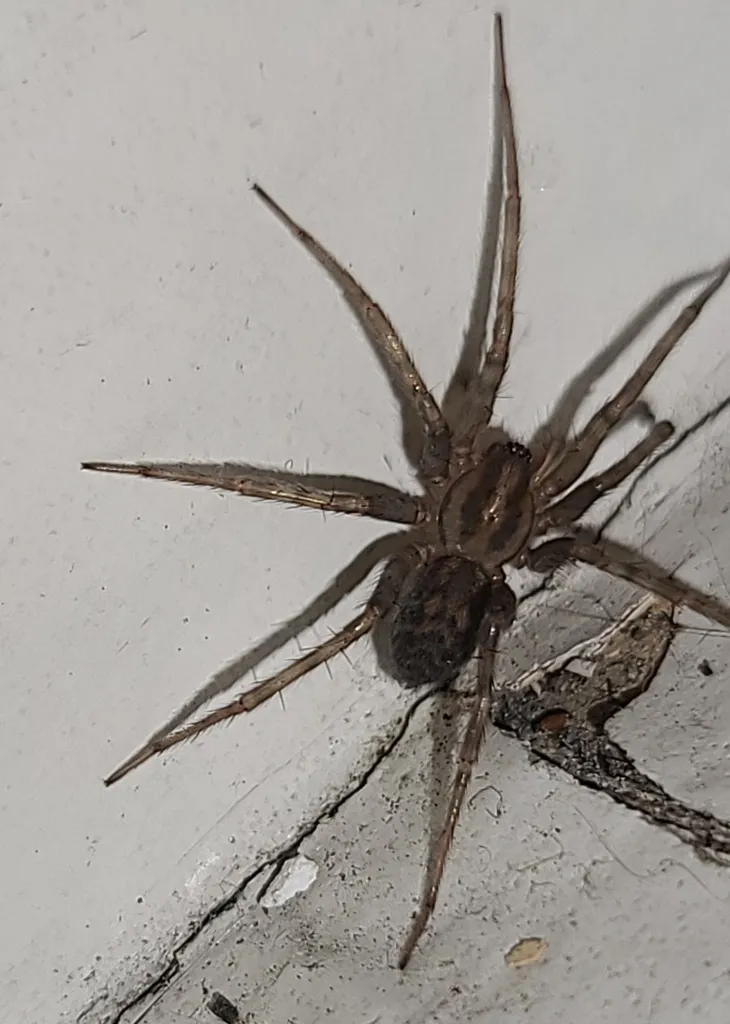
Cellar spiders and woodlouse spiders
Cellar spiders ("daddy longlegs") are pale brown with a violin-like smudge on some species, but their legs are many times longer than the body and they hang upside down in messy ceiling webs, vibrating when touched. Recluses build small, irregular, off-white webs near the floor and in boxes, and are rarely seen in the open.
The woodlouse spider (Dysdera crocata) is the one lookalike that also has six eyes. It has bright orange-red legs and front body, a smooth cream-to-grey abdomen and very large fangs for eating woodlice. It can give a painful nip, but the bite is not dangerous.
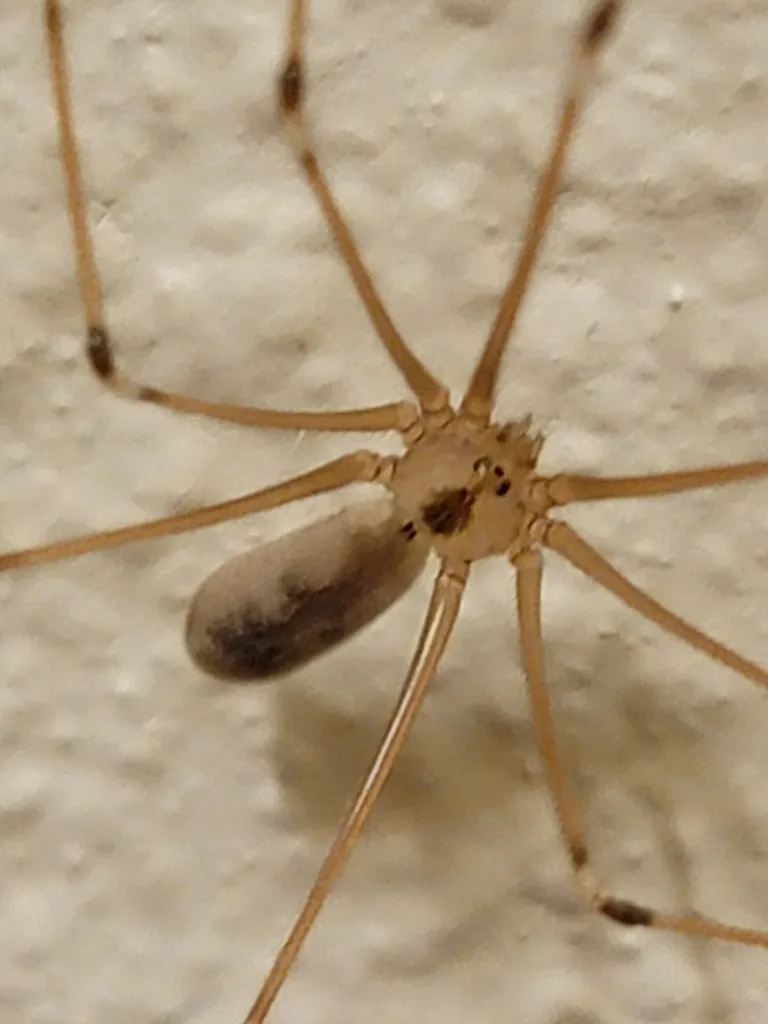
Found a brown spider in the house: what to do
- Trap it, do not squash it. A glass and a card keeps it whole for identification. A crushed spider loses the eye pattern and leg colour you need.
- Photograph the top of the body in good light, as close as your phone will focus, then a side view of a leg. Upload it to the spider identifier or the Bug Identifier app for a name in seconds.
- If it is a recluse, you probably have more. Use sticky traps along walls and behind furniture, shake out shoes and clothes that have been on the floor, and keep bedding off the floor. A professional can treat closets and attics.
- If it is not, put it outside or leave it. Wolf, grass, house and cellar spiders eat other insects and pose no real risk.
Most bites blamed on brown recluses turn out to be something else, often a skin infection. If a bite turns into a growing painful sore, see a doctor whatever spider you think it was. Spider bite stages shows what a recluse bite looks like day by day, and the brown recluse guide covers its habits and bite in detail.
Frequently Asked Questions
What spider is most often mistaken for a brown recluse?
The wolf spider, followed by the male southern house spider in the southern US and grass and funnel weaver spiders in autumn. All have eight eyes and most have banded or spiny legs, which a brown recluse never has.
How can you tell a wolf spider from a brown recluse?
Wolf spiders are bigger and hairier, have stripes on the body and banded, spiny legs, and two large forward-facing eyes out of eight. A brown recluse is slender, with six small eyes in pairs, plain legs, a plain abdomen and a dark violin on the front of the body.
Do brown recluses have stripes or bands on their legs?
No. The legs are one plain tan colour with only fine hairs. Bands, stripes or visible spines rule out a recluse.
Are there brown recluses in California or the Pacific Northwest?
The brown recluse does not live there, and confirmed finds are very rare and tied to items shipped from its native range. California has related desert recluses in desert areas of the southeast. The brown spiders found in houses there are usually house, funnel weaver, wolf or hobo spiders.
Is a hobo spider dangerous?
No longer thought to be. Earlier reports of necrotic hobo spider bites were not confirmed by later research, and the CDC removed the hobo spider from its list of medically important spiders.
Can I identify a spider from a photo for free?
Yes. Upload a clear photo of the top of the spider to the free spider identifier, or snap it with the Bug Identifier app, to get its name, how dangerous it is and the lookalikes it is confused with.

Identify any bug in seconds
Download Bug Identifier and get instant AI-powered identification with danger levels, species profiles, and safety information.

 Scan to get it on your iPhone