How to Identify a Spider Bite: Identification Chart, Stages Day by Day, and What Else It Could Be
A spider bite is one red bump that stung when it happened and fades within days. An identification chart of what each sign means, how ordinary, black widow and brown recluse bites change from hour one to week three, the infections and insect bites mistaken for them, and when to see a doctor.
Not sure what you found? Identify it from a photo, freeTo identify a spider bite, check three things. One bump, not several: a spider bites once, so a cluster or a line points to insects. A sting at the time, on skin pressed against something: a shoe, a glove, bedding. A red, slightly swollen bump 5 to 15 mm across that starts fading within two or three days and never makes pus. If you did not see the spider, treat "spider bite" as a guess: in a 2016 review of 134 published cases, 78 % did not meet the criteria for a verified bite, and the CDC notes that people sometimes confuse MRSA skin infections with spider bites.
Only two groups of spiders in North America do more: widows (cramps within hours, little to see on the skin) and recluses (a sore that develops over days).
Spider bite identification chart
| What you see | Most likely | What to do |
|---|---|---|
| One red, raised bump, 5 to 15 mm, felt as a sting, fading by day 2 or 3 | Ordinary spider bite (house, wolf, jumping or sac spider) or a single insect bite | Wash, cold pack; gone within a week |
| Two pin-sized dots 1 to 2 mm apart in the centre | Fang marks: fits a spider, but a weak clue, as most bites show none | As above |
| Small red mark, then spreading pain, muscle cramps and sweating within hours | Black widow | Medical care the same day |
| Flat or sunken centre, pale, blue-grey or bruise-purple, dry, with a red ring, at 24 to 72 hours | Brown recluse, if you are in its range | Doctor the same day; photograph it daily |
| Black scab after a week or more, then an open sore | The minority of recluse bites that ulcerate | Doctor |
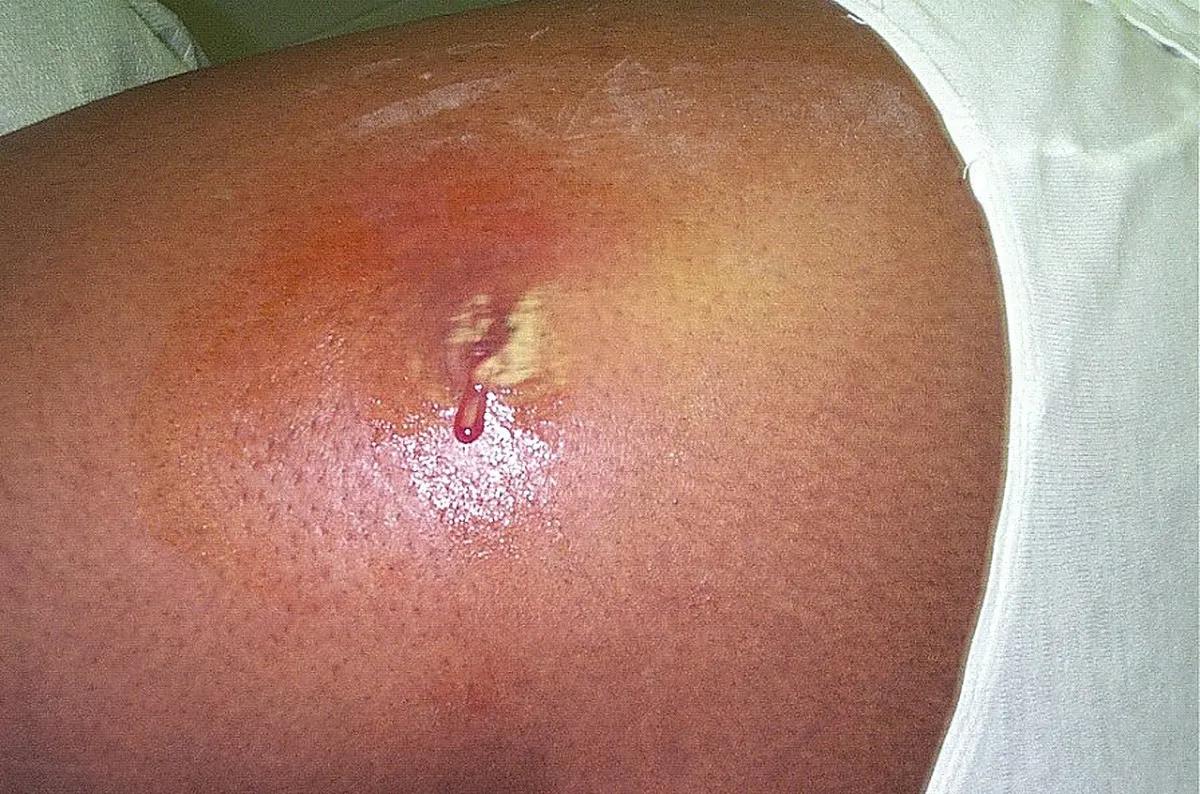
| White, yellow or green pus, a "pimple" with a head, hot, growing or coming back | Staph or MRSA infection (boil, abscess), not venom | Doctor; do not squeeze, keep it covered |
| Red streaks running from the bump, fever | A spreading infection | Urgent care today |
| Several bumps in a cluster or a line | Bed bugs, fleas, chiggers or mosquitoes | Compare them in the bug bite identifier |
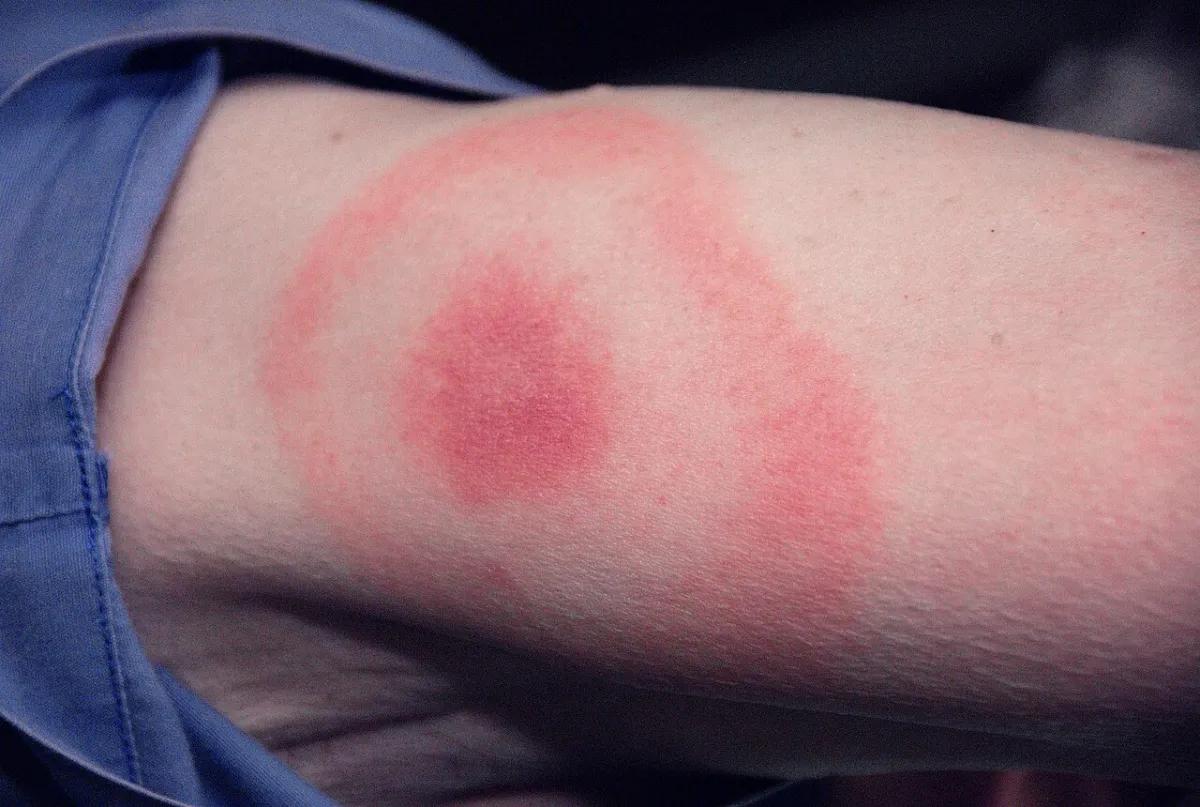
| Red ring that keeps widening days later, often clear in the middle (bullseye) | Tick bite with Lyme disease | Doctor |
The chart rules spiders out more reliably than it rules them in. On brown and black skin redness is harder to see, so go by swelling and warmth. If you saw or caught the spider, upload a photo to the free spider identifier: that settles more than the skin ever will.
Spider bite stages at a glance
| Time after bite | Ordinary spider bite (most species) | Black widow bite | Brown recluse bite |
|---|---|---|---|
| Minutes | Sharp pinprick or sting, often noticed | Pinprick, sometimes not felt; one or two faint red dots | Usually painless, often not noticed |
| 1 to 8 hours | Red bump 5 to 15 mm, mild swelling, itch | Local pain spreads; cramping in the belly, back, chest or thighs; sweating | Redness, stinging or burning, tenderness |
| 24 to 48 hours | Bump peaking or already shrinking | Body symptoms peak; the bite itself still looks minor | Pale or blue-grey centre, red ring around it ("red, white and blue"); may blister |
| 3 to 7 days | Fading; may leave a pink mark | Symptoms usually settle over a few days | Most bites fade like an ordinary bite; in a minority the centre darkens |
| 1 to 3 weeks | Gone | Gone, sometimes lingering fatigue | The minority: dry dark scab, then a shallow ulcer that heals over weeks to months |
Typical courses, not a diagnosis: a bite following the right-hand column, or body symptoms from the middle one, needs a doctor.
What an ordinary spider bite looks like
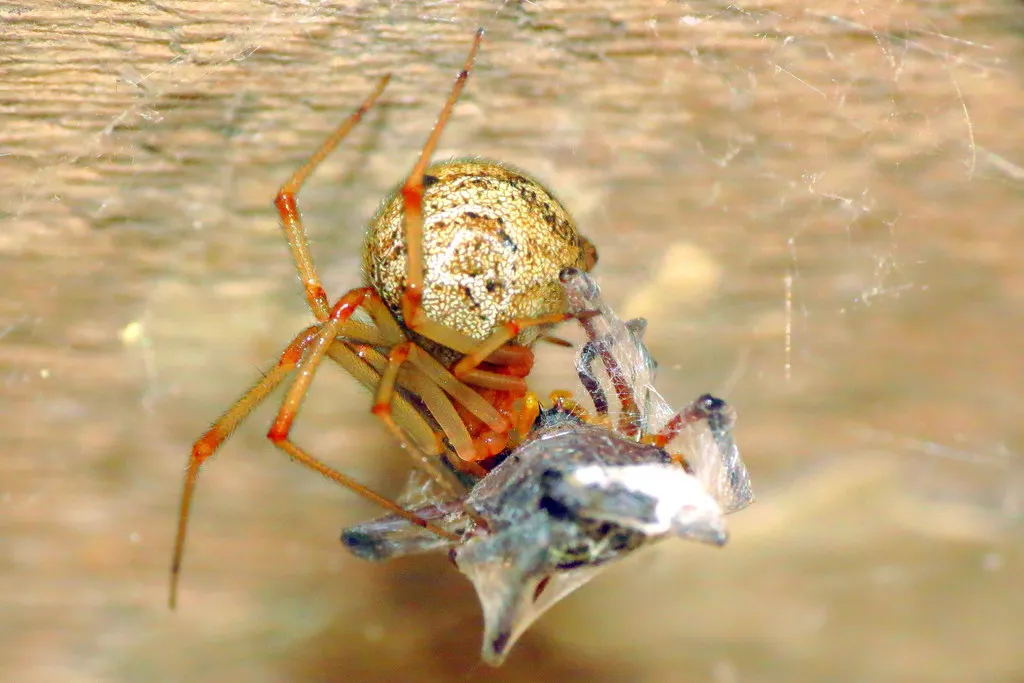
Most spiders that bite people (house spiders, wolf spiders, jumping spiders, sac spiders, orb weavers) have venom that does little to humans. The bite is one bump: 5 to 15 mm of redness around a small raised centre, like a pimple without a head. It stings at the time, is worst in the first day and fades over two to five days. A firm lump under it for a few days is normal; one that keeps growing or turns hot is not. Wolf spider bites hurt more because the spider is large (body up to 35 mm), but settle just as fast.
Black widow bite stages
Black widows (Latrodectus) live across the US and southern Canada. The female is glossy black, 8 to 13 mm long, with a red hourglass under the abdomen; see black widow identification with pictures.
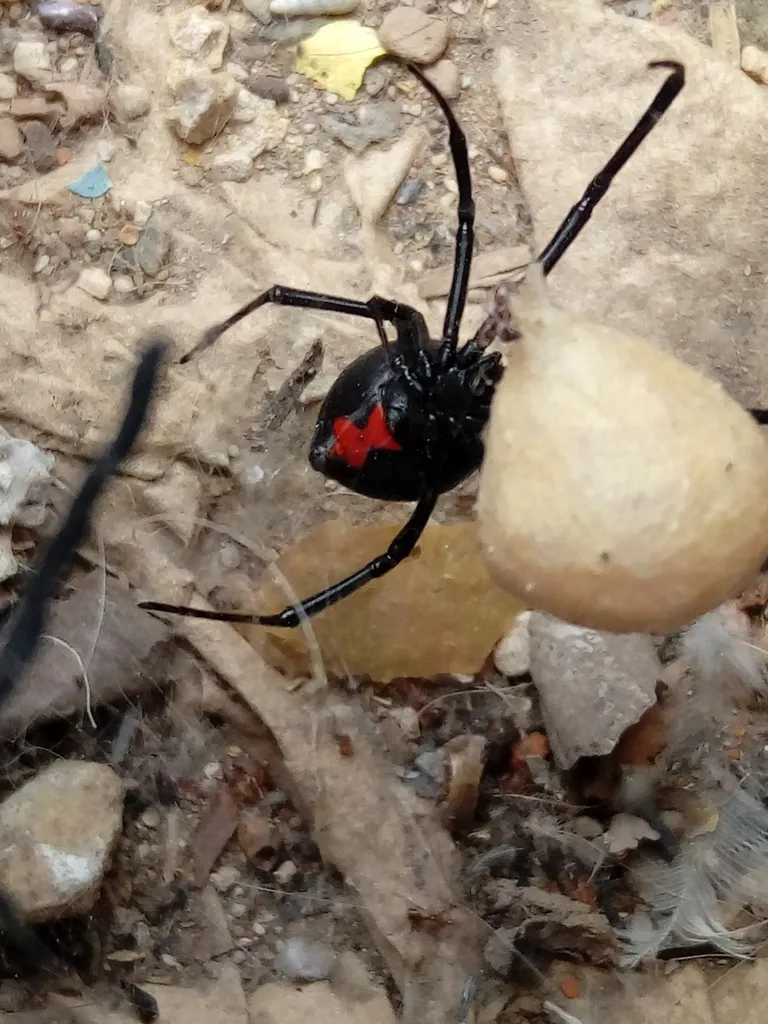
A widow bite is different because the skin looks unimpressive while the body does not. The bite is a pinprick, then one or two small red dots. Within 30 minutes to a few hours, pain spreads towards the trunk, with muscle cramps in the belly (it can mimic appendicitis), back, chest or thighs, plus sweating and nausea. Symptoms peak in the first day and ease over several days; severe cases get hospital pain relief and sometimes antivenom. Deaths are very rare, but children, older adults and people with heart conditions are more vulnerable. Spreading pain or cramps after a suspected widow bite means medical care the same day.
Brown recluse bite stages
The brown recluse (Loxosceles reclusa) lives in the south-central and midwestern US: from central Texas and western Georgia north to southeastern Nebraska, southern Iowa, Illinois, Indiana and southwestern Ohio. Outside that range a "recluse bite" is very unlikely. The spider is tan with a darker violin on the front body; see the brown recluse identification guide.
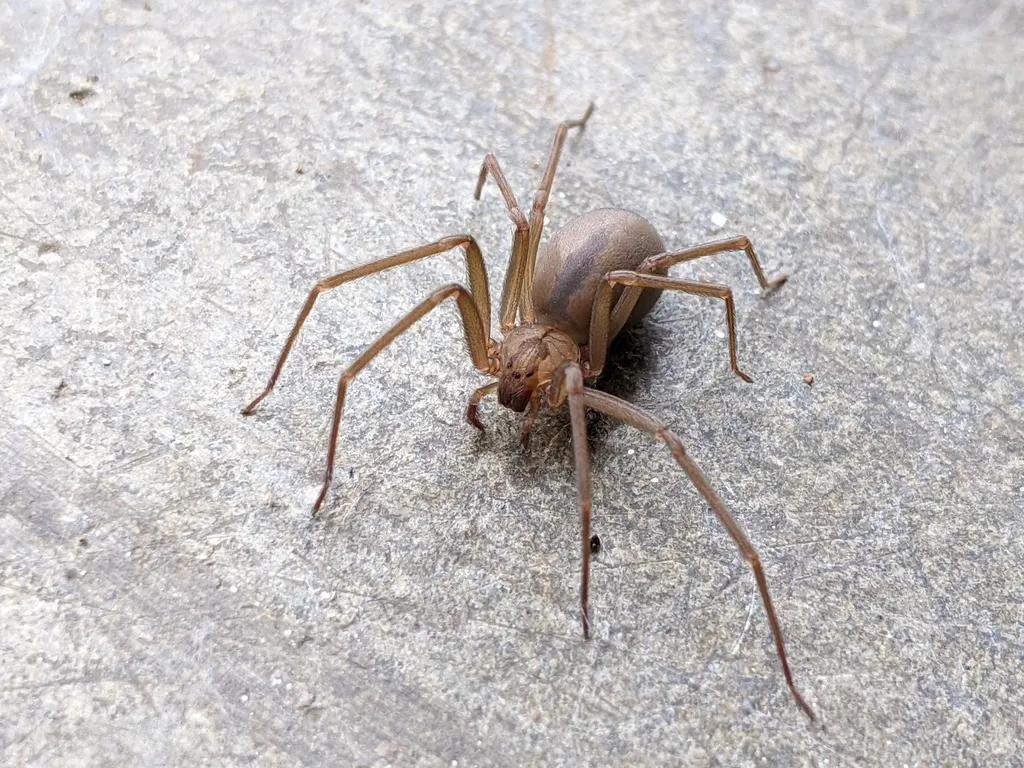
The bite is usually painless and noticed hours later. Over 2 to 8 hours it reddens, swells and stings or burns. On days 1 to 3 the centre may turn pale, bluish or purple inside a red ring, sometimes with a blister: a flat or slightly sunken, dry "red, white and blue" patch.
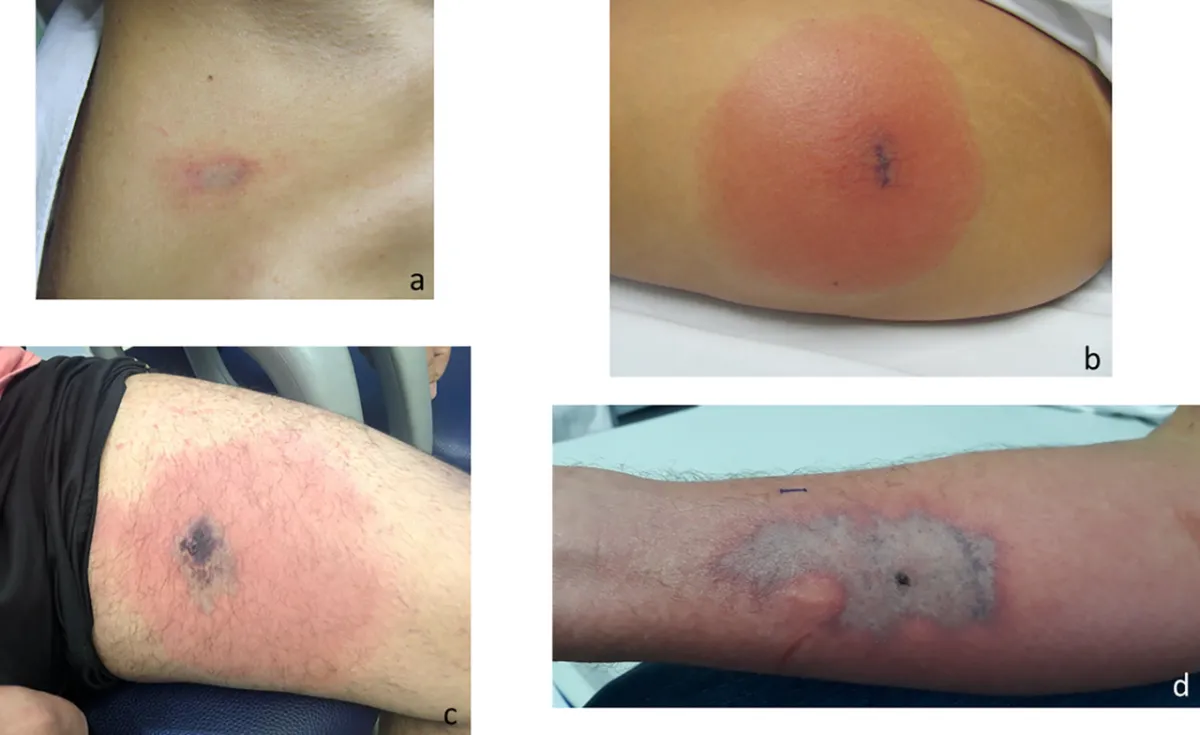

Most bites stop there and fade within a week or two. In a minority, the centre dries into a dark sunken scab over one to three weeks, then falls away to leave a shallow ulcer that takes weeks to months to heal and may scar.
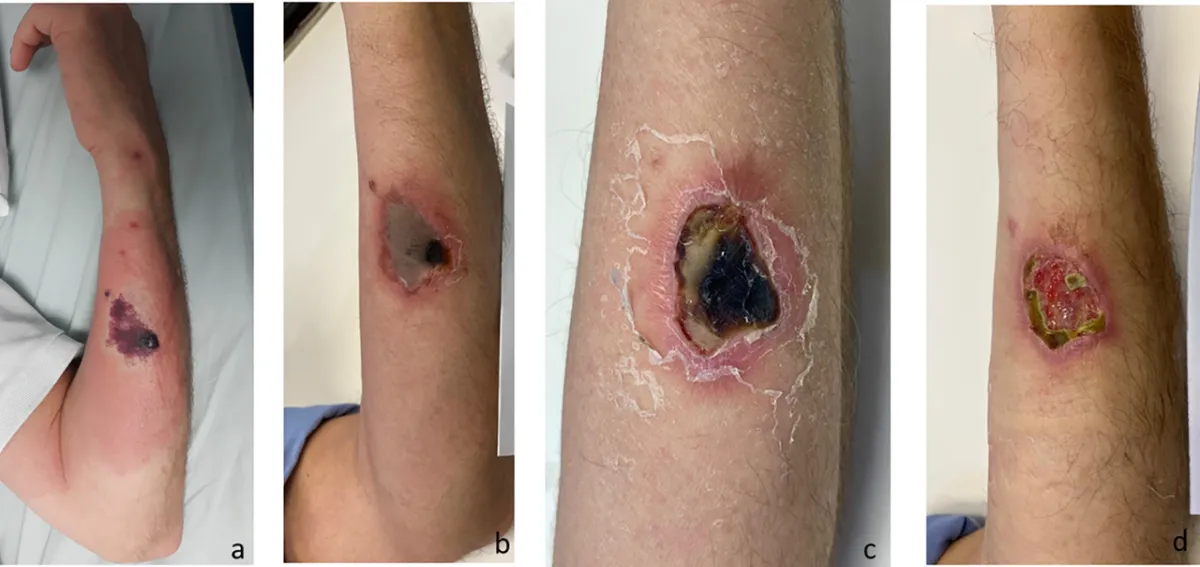

Rarely, and more often in children, the venom causes body-wide illness in the first days (fever, chills, a rash, dark urine). That is an emergency.
Signs that argue against a recluse bite. Dermatologists use the mnemonic NOT RECLUSE; any one of these makes a recluse unlikely: Numerous lesions, Occurrence outside the spider's range, Timing in the wrong season, Red centre, Elevated rather than sunken, Chronic, Large (over 10 cm), Ulcerates within the first week, Swollen, Exudative (pus or oozing).
What gets mistaken for a spider bite
A reliable diagnosis needs someone to have seen the spider bite, and the spider identified. Otherwise consider these first:

| Lookalike | How it differs from a spider bite |
|---|---|
| Skin infection (MRSA, staph boil) | A pimple-like bump that grows, gets hot and painful and fills with pus over a few days. Often comes back. The most common "spider bite" |
| Mosquito bites | Usually several, on exposed skin, not felt at the time: soft, puffy, very itchy wheals within minutes, gone in 1 to 3 days. A spider bite is one firmer bump that hurt when it happened |
| Flea, bed bug and chigger bites | Many itchy bumps in clusters or lines: flea bites around the ankles, bed bug bites on skin exposed in bed, chigger bites at the sock line and waistband |
| Assassin and kissing bug bites | A wheel bug or other assassin bug bite is felt at once, burns like a spider bite and can stay sore for days, but you usually see the bug. Kissing bug bites come at night, often on the face, and are painless at the time |
| Tick bite | A tick may still be attached. A red patch that appears 3 to 30 days later and keeps widening, sometimes into a bullseye, is the Lyme disease rash and needs a doctor |
| Ingrown hair, shingles | An ingrown hair sits on a follicle; shingles is a painful band of blisters on one side of the body |

Not sure which insect? Upload a photo to the bug bite identifier, or work backwards from where the bites are with What bit me?.
Does it matter where the bite is?
Only as a clue to how it happened. Spiders bite where they get trapped against skin: hands and fingers (gloves, woodpiles), feet, toes and ankles (shoes), and the buttocks, thighs, stomach or armpit (clothing, towels, bedding). A new bump on the face, forehead or lip found on waking is more often a mosquito, a bed bug or a pimple.
Outside the US and Canada
- UK and Ireland: no native spider causes serious harm; the noble false widow (Steatoda nobilis) bites like a wasp sting.
- Australia: a funnel-web bite is an emergency: pressure bandage, keep still, call 000. Bites from the redback, a widow relative, cause hours to days of pain. A study of 130 confirmed white-tailed spider bites found no ulcers.
- Latin America: recluse (violinista) bites can be severe; see picaduras de araña.
What to do after a spider bite
- Wash with soap and water.
- Apply a cold pack wrapped in a cloth for up to 20 minutes.
- Keep the limb raised if it is swollen.
- Take an over-the-counter painkiller for pain; use an antihistamine or hydrocortisone cream for itch.
- Don't scratch, cut or squeeze the bite, and don't apply heat or suction.
If you can, catch or photograph the spider, even a squashed one: upload the photo to the free spider identifier, or let the Bug Identifier app confirm the species.
When to see a doctor
Go the same day if:
- you think it was a black widow, brown recluse or (in Australia) funnel-web, or you have spreading pain, cramps, sweating or nausea after a bite;
- the centre turns dark, purple or black, or a blister or open sore develops;
- redness keeps spreading or the bump is no better after 48 hours, red streaks run from it, it fills with pus, or you have a fever (usually an infection, which may need antibiotics);
- the person bitten is a young child, an older adult, or has a weakened immune system.
Call emergency services for swelling of the lips, tongue or throat, trouble breathing, fainting or confusion.
Sources: CDC (MRSA, Lyme disease), NHS (insect bites and stings), Stuber and Nentwig 2016 (134 case reports), Stoecker, Vetter and Dyer 2017 (NOT RECLUSE), Malaque et al. 2022 (recluse bite photographs).
Frequently Asked Questions
Does a spider bite look like a pimple?
Often, yes: a single raised red bump, sometimes with a tiny pale or dark point in the middle. Unlike a pimple it stings or itches from the start and does not form a white head. A pimple-like bump that fills with pus, grows or recurs is more likely a skin infection.
Why does my spider bite have white pus?
Spider venom does not make pus. White, yellow or green pus with spreading redness and warmth means bacteria: an infected bite or, far more often, a boil or MRSA infection that was never a bite. Do not squeeze it; see a doctor, especially with fever or red streaks.
Can a spider bite more than once?
A trapped spider can bite twice, but spiders do not feed on people, so it has no reason to keep biting. Three or more bumps, new bumps each morning, or bumps in a line or cluster are the pattern of bed bugs, fleas, chiggers or mosquitoes.
Should I pop a spider bite blister?
No. Keep it clean and covered and let it drain on its own; breaking it raises the risk of infection.

Identify any bug in seconds
Download Bug Identifier and get instant AI-powered identification with danger levels, species profiles, and safety information.

 Scan to get it on your iPhone