How to Identify a Tick from a Picture
A tick's species is written on its back. Adult ticks have a hard shield (the scutum) right behind the head, and its colour and pattern are the quickest way to tell them apart. In a female the shield covers only the front of the body; in a male it covers almost all of it.
- Photograph it from above on white paper, with a coin or ruler for size. Tape it down or put it in a clear bag if it is still moving.
- Get the shield in focus. Black shield with an orange-red body, a single white dot, a silvery ornate pattern or plain brown each point to a different tick.
- Count the legs. Adult and nymph ticks have 8, larvae have 6. Bed bugs and beetles have 6 and no shield.
- Keep the tick in a sealed bag or a jar with rubbing alcohol for a few weeks after a bite, in case you get sick and a doctor wants to see it.
The identifier above names the tick, says which diseases that species can carry and what to do. A photo cannot tell whether a tick is infected; only a lab test can, and most ticks are not.
Quick Tick Identification Chart
| Tick | Unfed size (adult female) | Key marking | Where | Can carry |
|---|---|---|---|---|
| Blacklegged (deer) tick | 3 mm; nymph 1-2 mm | Black shield, orange-red body, black legs | Eastern US, upper Midwest; West Coast (western blacklegged tick) | Lyme disease, anaplasmosis, babesiosis, Powassan virus |
| Lone star tick | 4 mm | One white dot on the female's back | Southeast, east and south-central US | Ehrlichiosis, tularemia, STARI; bites linked to alpha-gal (red meat) allergy |
| American dog tick | 5 mm | Ornate silvery-white shield | East of the Rockies, parts of the Pacific coast | Rocky Mountain spotted fever, tularemia |
| Brown dog tick | 3 mm | None: plain reddish-brown | Worldwide, often indoors with dogs | Rocky Mountain spotted fever (southwest US, Mexico) |
| Sheep (castor bean) tick | 3-4 mm | Like the deer tick: black shield, red-orange body | UK and Europe | Lyme disease, tick-borne encephalitis |
| Asian longhorned tick | 3 mm | None: small, plain reddish-brown | Eastern US since 2017, spreading | Mainly a livestock pest so far |
Blacklegged Tick (Deer Tick)
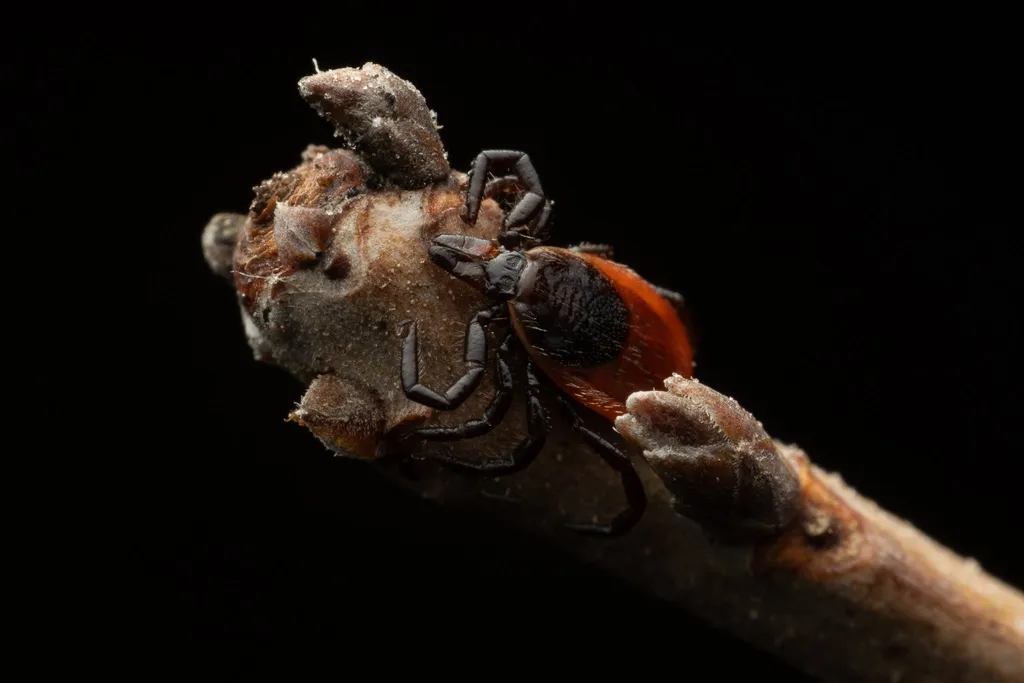
The tick behind most Lyme disease in North America. The adult female is small and two-toned: black shield and black legs, orange-red to brick-red body behind. Males are all dark. The nymph is the one to worry about: about the size of a poppy seed, active in late spring and summer, and easy to miss in skin folds, behind the knees and along the hairline. Adults are active in autumn and on mild winter days, so finding one in November is normal. On the West Coast the near-identical western blacklegged tick (Ixodes pacificus) does the same job.
Lone Star Tick
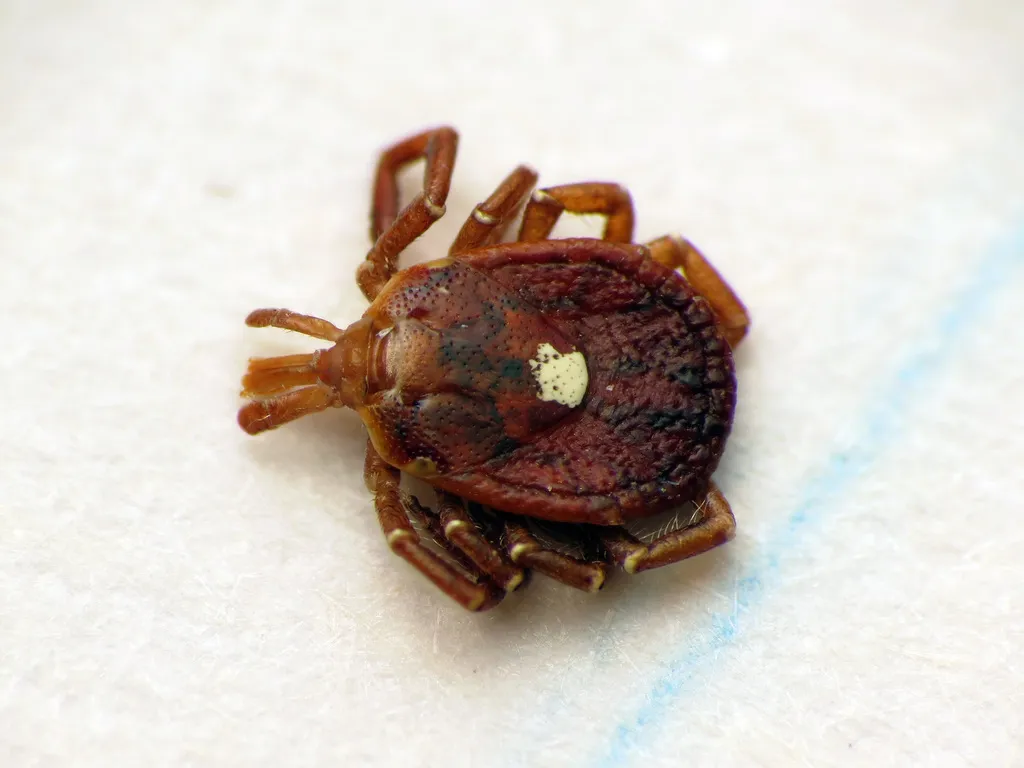
The female's single white dot is the easiest field mark of any tick. Lone star ticks are aggressive biters that walk towards people, and their larvae turn up in groups of dozens ("seed ticks"), which can look like a rash of tiny bites. They do not spread Lyme disease, but they do carry ehrlichiosis, and their bites are linked to alpha-gal syndrome, an allergy to red meat that shows up hours after eating it.
American Dog Tick
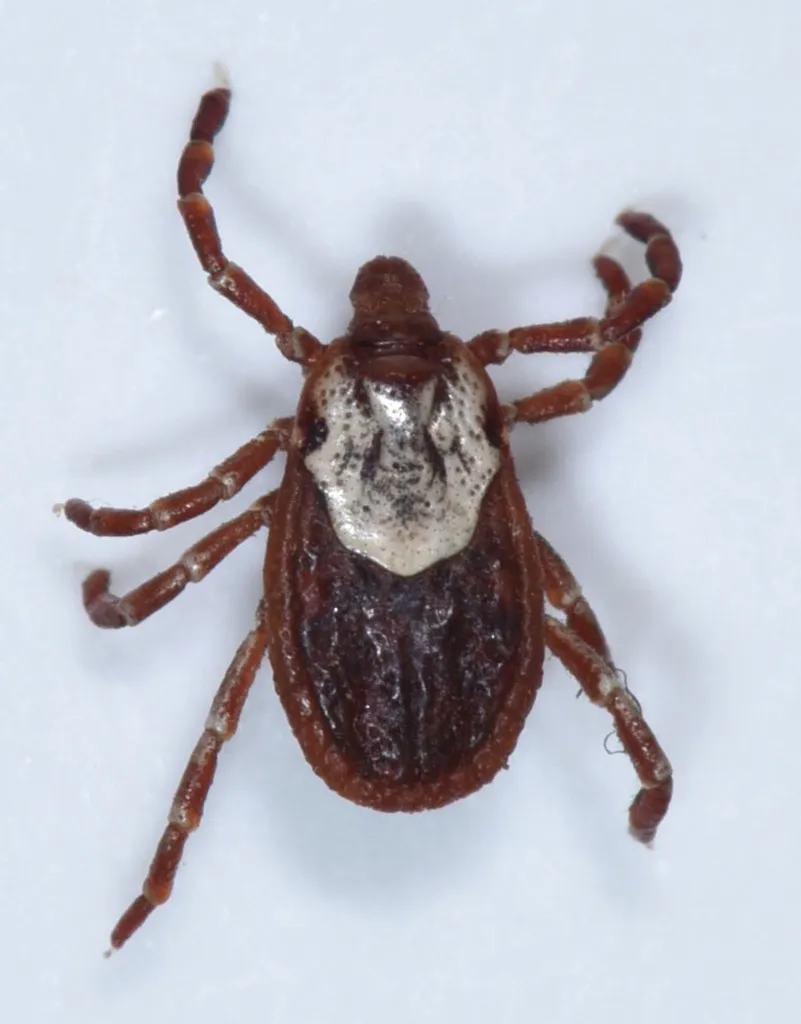
Bigger, flatter and more patterned than a deer tick: brown with a mottled, silvery-white shield. Most common in grassy fields and along trails in spring and early summer. In the Rocky Mountain states the similar Rocky Mountain wood tick takes its place. Both can carry Rocky Mountain spotted fever, so a fever and rash within two weeks of a bite needs a doctor that day.
Brown Dog Tick
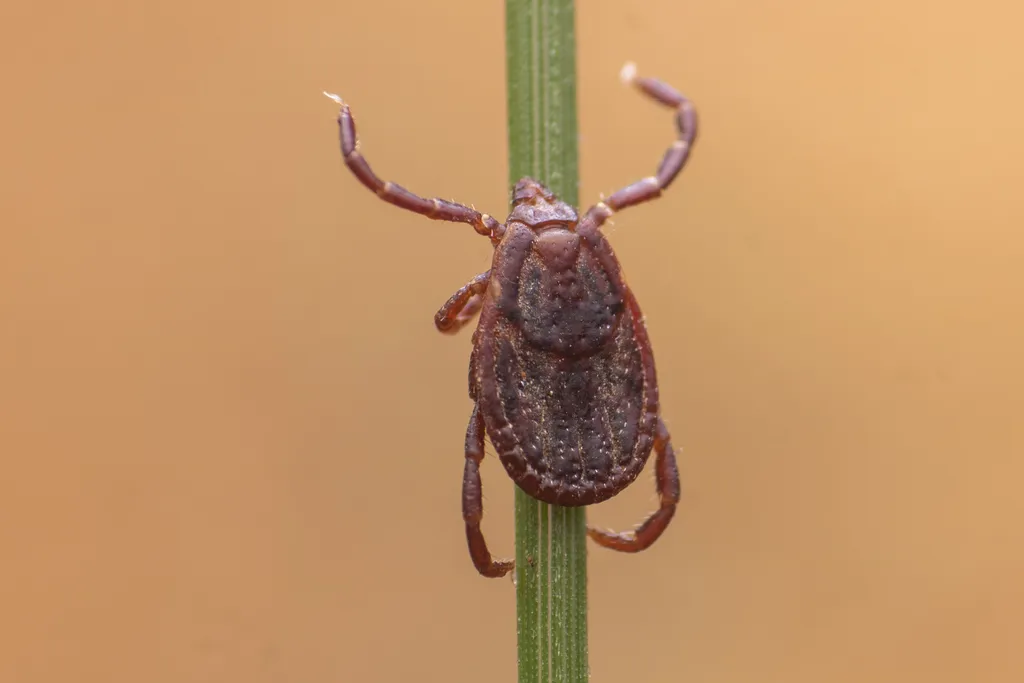
The plain one: uniformly reddish-brown with no white marks, slim and teardrop-shaped. It is the only common tick that can complete its whole life cycle indoors, so ticks on walls, skirting boards and dog beds in winter usually mean brown dog ticks living in the house or kennel. They feed mostly on dogs and occasionally on people.
Sheep Tick (Castor Bean Tick)
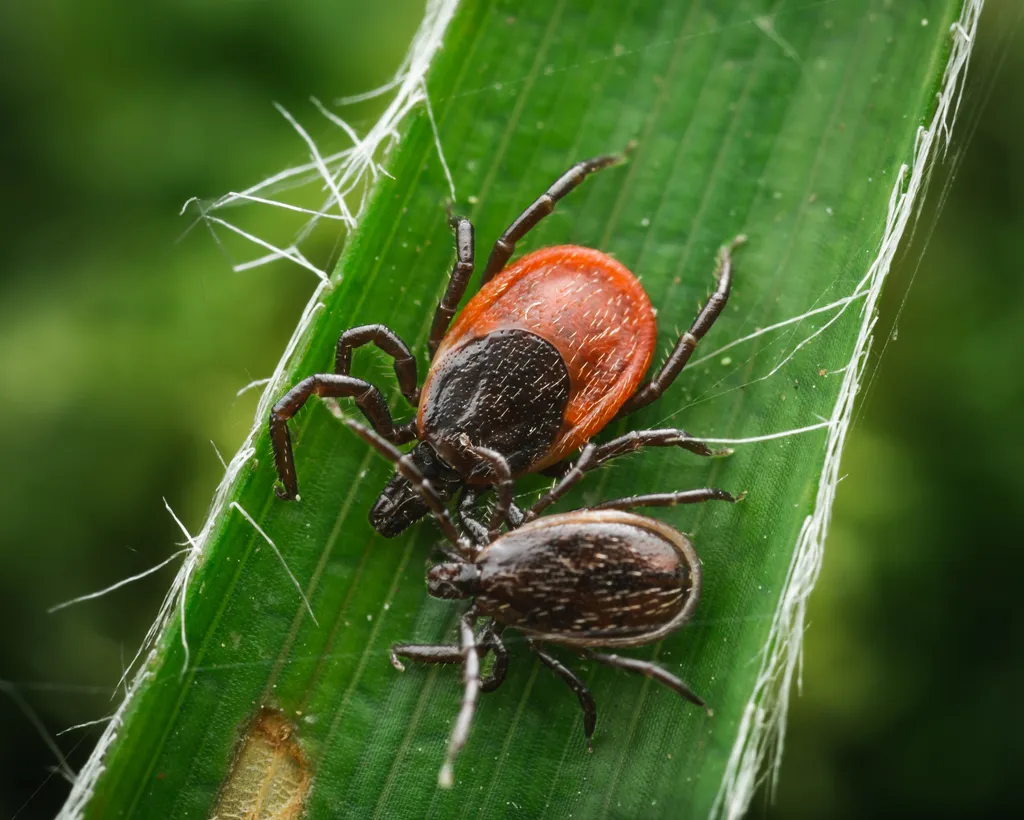
The tick people find after a walk in the UK, Ireland and most of Europe: in bracken, long grass and woodland, especially where there are deer or sheep. It looks almost the same as the American deer tick and carries Lyme disease, and in parts of Europe tick-borne encephalitis. In the UK the NHS advises removing it as soon as possible and watching the bite for a spreading rash for up to three months.
What an Engorged Tick Looks Like
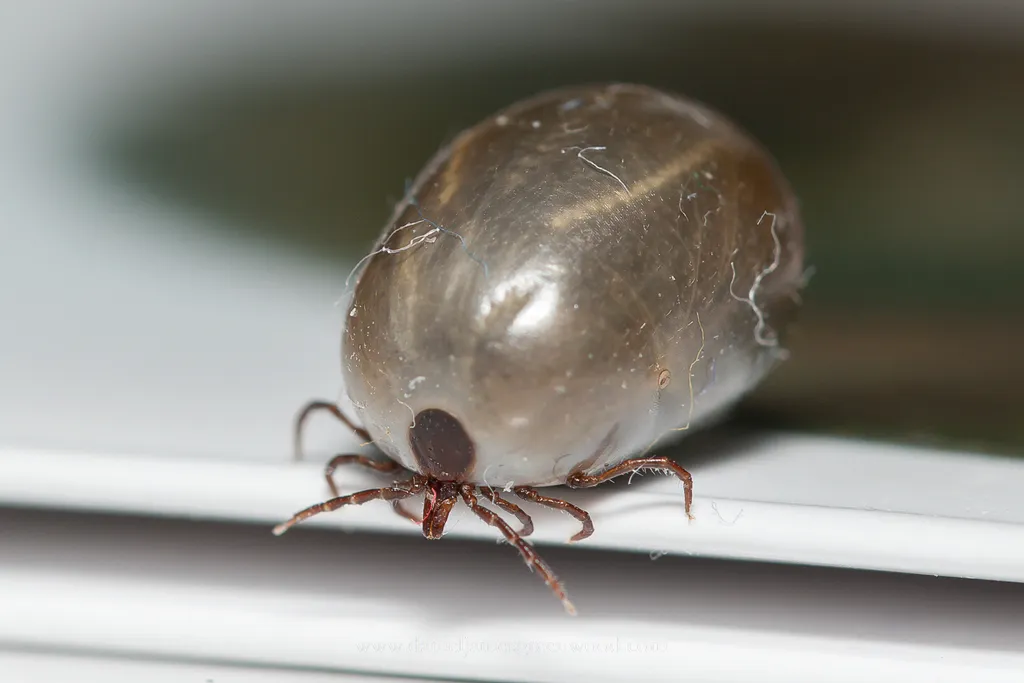
A tick that has fed for a few days swells many times its size and turns grey, bluish or pale brown, so it can look like a skin tag, a seed or a small bean. The shield behind the head does not grow, so look there for the species. Engorged ticks are almost always females; the longer one has been attached, the higher the chance it has passed on an infection, which is why removing ticks early matters.
Tick or Something Else?
| You found | Legs | How to tell it apart |
|---|---|---|
| Tick | 8 (larvae 6) | Hard shield behind the head, mouthparts sticking out in front, flat when unfed |
| Bed bug | 6 | No shield, short antennae, found in mattress seams, not on the skin. See the bed bug identifier |
| Spider beetle | 6 | Round, shiny, long antennae, in pantries. See tiny brown bugs in the house |
| Clover mite | 8 | Tiny, bright red, crawling on window sills in spring and autumn, harmless |
| Chigger | 6 | Too small to see; you find the bites, not the mite. See chigger bites |
How to Remove a Tick Safely
- Use fine-tipped tweezers and grasp the tick as close to the skin as you can.
- Pull straight up with steady, even pressure. Do not twist or jerk. If the mouthparts stay in the skin, leave them; the skin pushes them out as it heals.
- Clean the bite and your hands with rubbing alcohol or soap and water.
- Keep or dispose of the tick: in a sealed bag or a jar of alcohol (keep it if you can), or wrapped tightly in tape. Never crush it with your fingers.
- Skip the folk remedies: no nail polish, petroleum jelly or a hot match. They make the tick stay longer, not let go.
See a doctor if, in the weeks after a bite, you get a red rash that spreads (often with a clear centre like a bullseye, but not always), fever, chills, headache, aching joints or tiredness. Say that you were bitten by a tick and when. In areas where Lyme disease is common, a doctor may offer a single preventive antibiotic dose after a deer tick bite that was attached for a day and a half or more.
Sources: CDC tick identification, tick removal and tickborne disease pages; NHS Lyme disease guidance.
Frequently Asked Questions
How do I identify a tick from a picture?
Photograph it from above on white paper, with the shield behind the head in focus, and upload it to the tick identifier on this page. The shield's colour and pattern separate the common ticks: black shield with an orange-red body for a deer tick, a single white dot for a lone star tick, a silvery pattern for a dog tick and plain brown for a brown dog tick.
What tick has a white dot on its back?
The female lone star tick. It is found across the southeastern, eastern and south-central United States and does not spread Lyme disease, but it can carry ehrlichiosis and its bites are linked to alpha-gal (red meat) allergy.
What does a deer tick look like?
Small and two-toned. The adult female is about 3 mm, with a black shield and black legs on an orange-red body. The nymph has the same shape but is only 1-2 mm, about the size of a poppy seed, and is the stage that causes most Lyme disease.
Can a picture tell if a tick has Lyme disease?
No. A photo can name the species and so tell you which diseases it is able to carry, but only a lab test shows whether that tick was infected, and most are not. What matters more is how long it was attached and whether you get a rash or fever in the following weeks.
Is it a tick or a bed bug?
Count the legs and look behind the head. Adult ticks have 8 legs and a hard shield; bed bugs have 6 legs, no shield and are found in the bed rather than attached to skin.
Is this tick identifier free?
Yes. You can identify 3 photos a day in your browser without an account, and the photo is not stored. The Bug Identifier app for iPhone identifies straight from the camera.