Tiny White Bugs in the House: What They Are, With Pictures
Tiny white bugs indoors are almost always booklice, mould mites, springtails, mealybugs, whiteflies or, on wood, termite workers. Sort yours by where you found it and whether it jumps, flies or looks like moving dust, with photos and what to do about each.
Not sure what you found? Identify it from a photo, freeMost tiny white bugs found indoors are one of six things, and how they move tells you which. If they look like specks of dust that walk, they are booklice (1 to 2 mm, pale, on books, windowsills and damp walls) or, if you need a magnifier to see legs at all, mould mites. If they jump when touched, especially in a plant pot or a damp bathroom, they are springtails. If they fly up in a little cloud when you brush a plant, they are whiteflies. If they sit still and look like cotton on a houseplant stem, they are mealybugs. And if they are soft, creamy and a few millimetres long inside wood, they may be termite workers, the only one of these worth an urgent call.
None of the common ones bite. Tiny white bugs are almost always a damp problem or a houseplant problem, not a hygiene or health one.
The usual suspects
Sizes are body length without legs or antennae. A grain of table salt is about 0.3 mm; a sesame seed about 3 mm.
| Bug | Size | Look | Where you find it | Moves how? | Bites? |
|---|---|---|---|---|---|
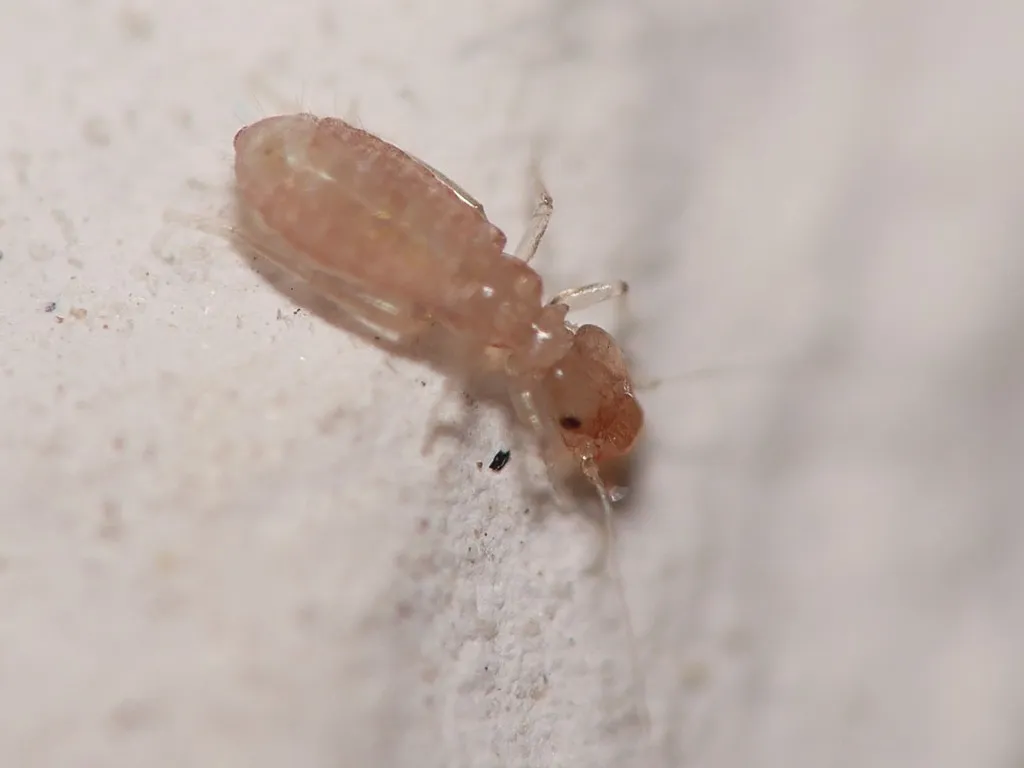
| Booklouse (psocid) | 1 to 2 mm | Soft, pale tan to almost clear, big head, no wings | Books, paper, windowsills, damp walls, flour, new houses | Runs in quick bursts | No |
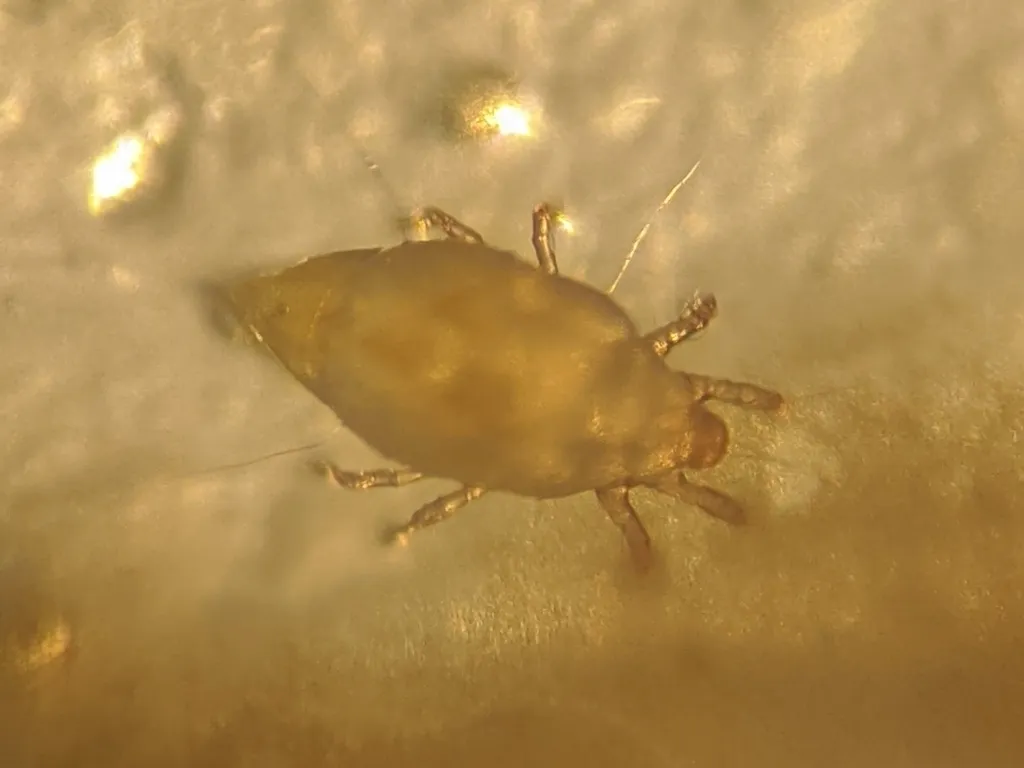
| Mould mite / grain mite | 0.3 to 0.5 mm | Pearly white, round, eight legs under a magnifier | Mouldy food, damp flour and cereal, new plaster, damp storage boxes | Crawls slowly; in numbers looks like moving dust | No, but heavy contact can cause a mild itchy rash |
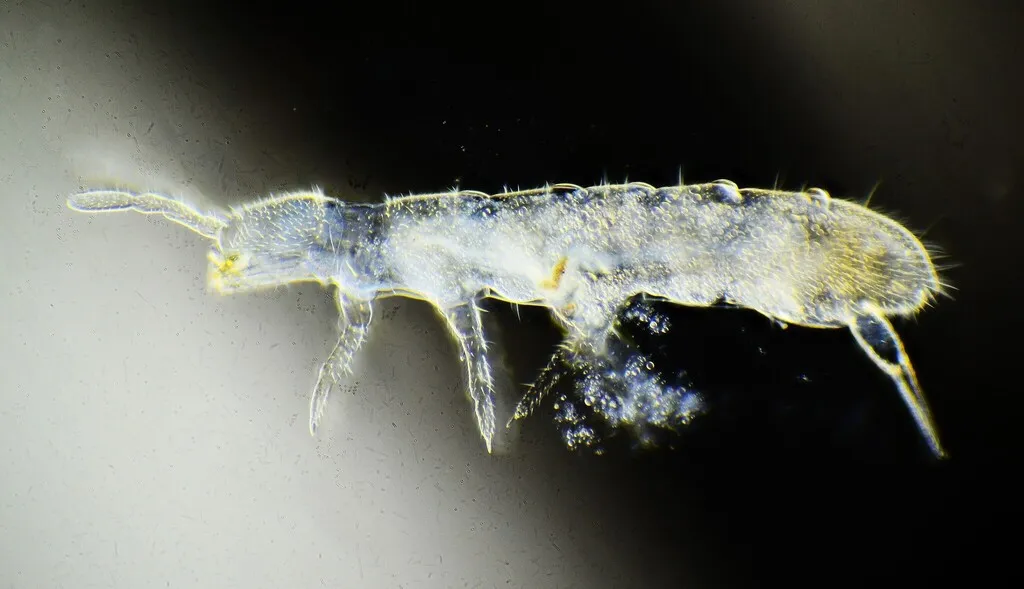
| Springtail | 1 to 2 mm | White, grey or silvery, slender, short antennae | Houseplant soil, bathroom, basement, sink and tub | Jumps when touched | No |
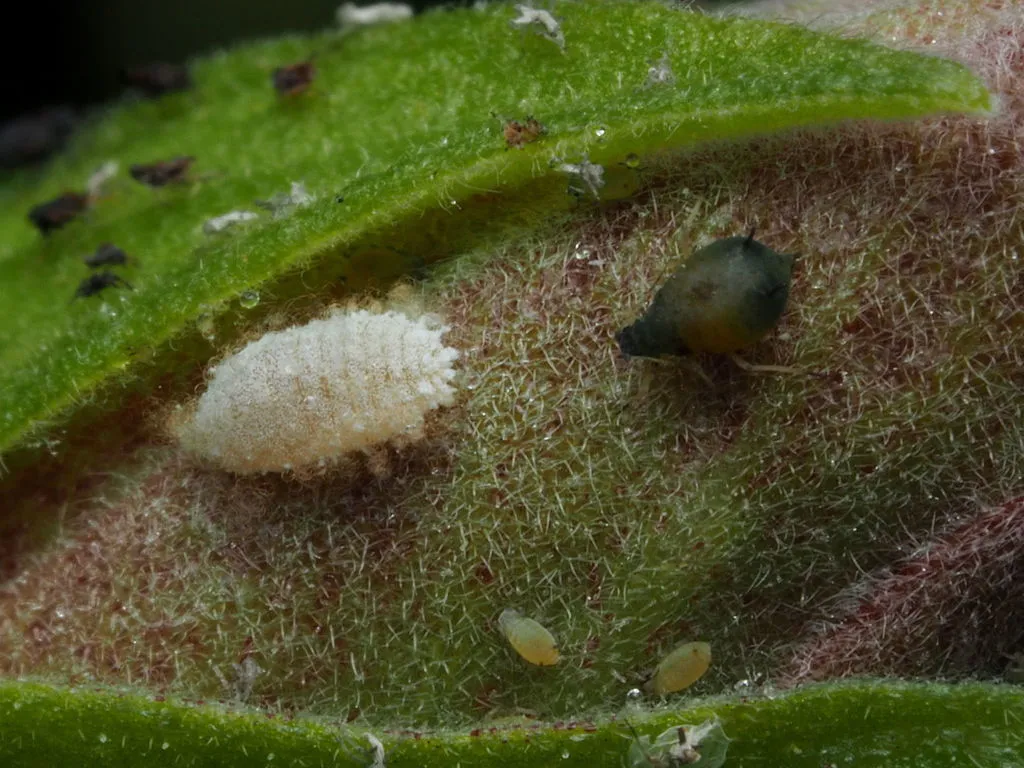
| Mealybug | 2 to 4 mm | Oval, covered in white wax, often with cotton-like fluff | Houseplant stems, leaf joints, undersides of leaves; root mealybugs on the root ball | Barely moves | No |
| Whitefly | 1.5 to 2 mm | Tiny white moth-like fly with powdery wings | Underside of leaves of houseplants and herbs | Flies up in a cloud when the plant is moved | No |
| Termite worker | 3 to 6 mm | Soft, creamy white, straight beaded antennae, no wings | Inside damaged wood, under skirting boards, in mud tubes | Crawls, hides from light | No |
| Bed bug nymph (just hatched) | 1 to 1.5 mm | Almost colourless until it feeds, then red | Mattress seams, bed frame | Crawls | Yes, at night |
| Young silverfish | 2 to 5 mm | Whitish, carrot-shaped, three tail bristles | Bathrooms, books, cupboards | Wriggles fast like a fish | No |
| Fungus gnat larva | 3 to 6 mm | Clear-white thread with a shiny black head | Top layer of wet houseplant soil | Wriggles | No |
One you cannot see: dust mites are about 0.25 mm and translucent, too small to spot with the naked eye. If you can see a white bug moving on your bed or sofa, it is not a dust mite.
Pictures of the most common tiny white bugs
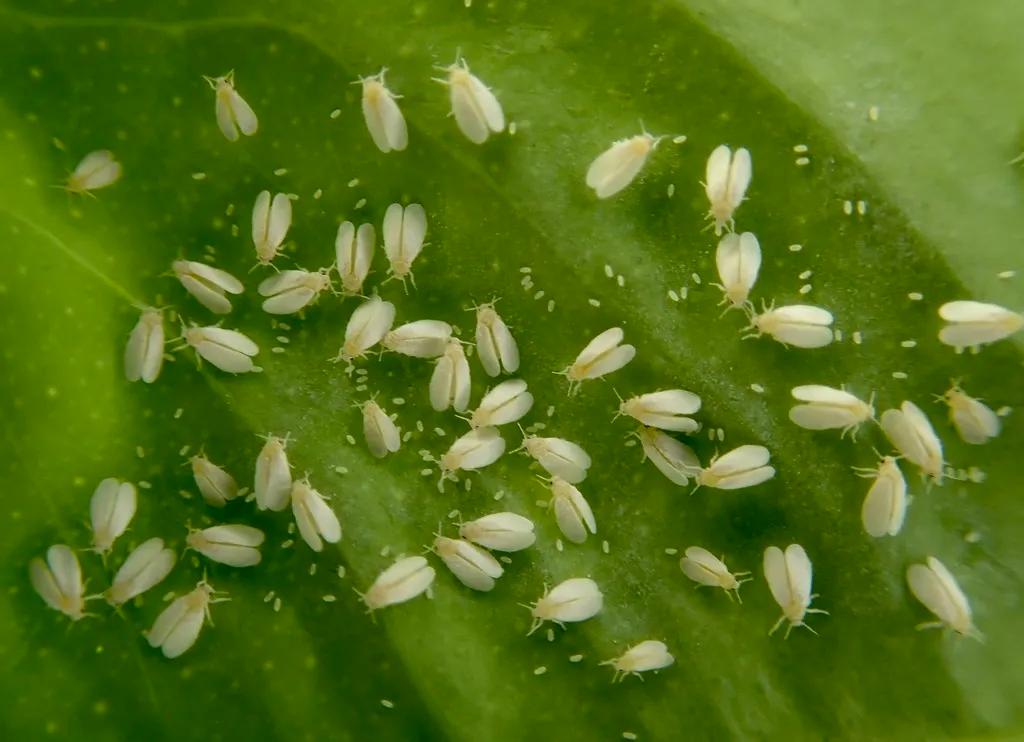
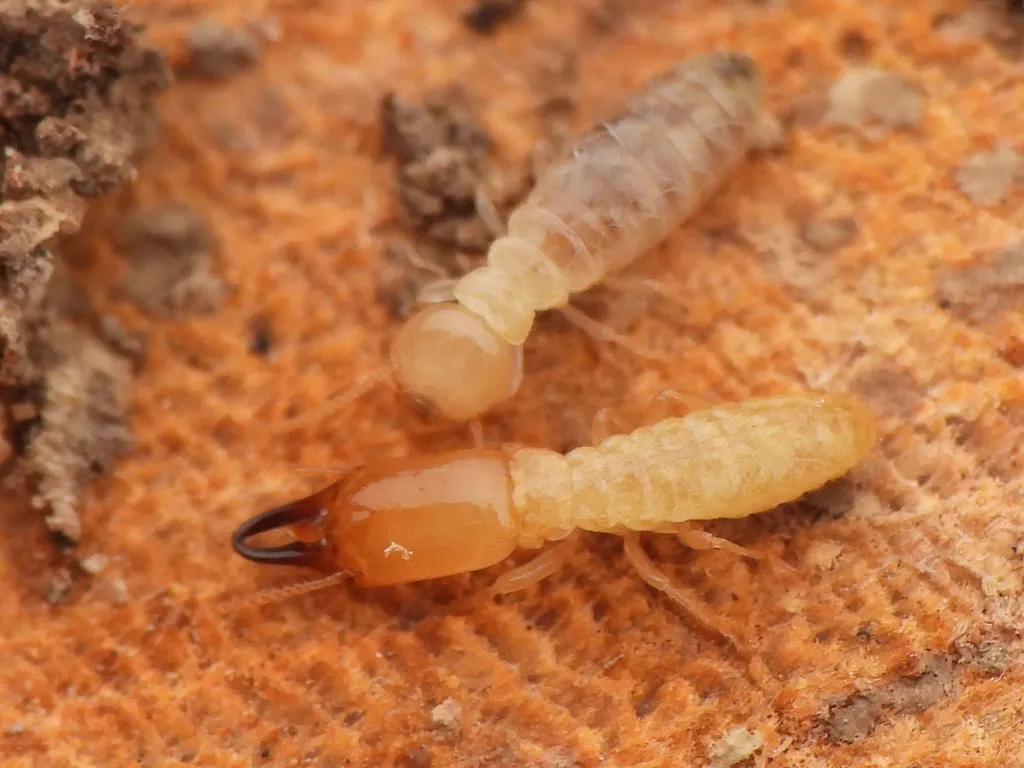
Tiny white bugs that look like dust
This is the most common description, and it points to two bugs.
Booklice are the specks you notice on a windowsill, a book page, a bag of flour or a freshly painted wall. They run in short bursts and are just big enough to see as insects if you look closely. They eat microscopic mould, so they turn up where relative humidity sits above about 50 to 60 %: new houses where plaster is still drying, bathrooms, basements, cupboards on an outside wall, and stacks of paper.
Mould mites and grain mites are smaller, about the size of a grain of salt, and you notice them as a mass: a film of pale "dust" on cereal, flour, pet food, cheese or a damp cardboard box that seems to shift. Run a finger through it and it feels faintly gritty. They need damp food or mould and die out once things dry. Handling heavily infested food can cause a short-lived itchy rash (known as grocer's itch), but they do not live on people.
If yours are in the pantry, our guide to bugs in flour and rice covers the beetles and moth larvae that often share the same packets.
Small white bugs on wood
On furniture, window frames and shelves, white specks are usually booklice feeding on mould in the finish, especially on new or damp wood. Wipe them off and dry the area.
If the white bugs are inside the wood, soft, creamy and 3 to 6 mm long, treat it as termites until proven otherwise. Workers avoid light and dry air, so you normally see them only when you break into damaged wood, a skirting board or a mud tube on a wall. Other signs: wood that sounds hollow, paint that blisters, pencil-thin mud tubes on the foundation, and piles of discarded wings in spring. Do not spray them; call a licensed pest professional so the colony can be treated properly.
Not to be confused with white ants: that is just an old name for termites. Real ants are never soft and white as adults.
Tiny white bugs in soil and on houseplants
Look at what they do:
- Jump when you water or touch the soil: springtails. They feed on fungi in wet soil and are harmless to the plant. Let the top few centimetres dry between waterings and they fade away.
- White cotton on stems and leaf joints, sticky leaves: mealybugs. They suck sap and weaken the plant. Wipe them off with a cotton bud dipped in rubbing alcohol, repeat weekly, and isolate the plant. If you see white fluff on the roots when you repot, those are root mealybugs: wash the roots, repot in fresh soil and a clean pot, or bin the plant.
- Fly up in a cloud from under the leaves: whiteflies. Yellow sticky traps catch the adults; insecticidal soap sprayed on the undersides every few days for two weeks deals with the young.
- Tiny black flies around the pot, with clear thread-like larvae in the top of the soil: fungus gnats. Same fix as springtails, let the soil dry.
Tiny white bugs in the bathroom
Bathrooms are the classic home of springtails (jumping, often in the sink or tub), booklice (on the ceiling and walls where condensation collects) and young silverfish (whitish, fast and fish-shaped). All three point to humidity. Run the extractor fan during and for 20 minutes after a shower, fix drips and leaks, and keep humidity under 50 %; Penn State Extension notes that booklice cannot develop below that. Our guide to common house bugs has photos of adult silverfish and the other bathroom regulars.
Tiny white bugs in bed or on clothes
A tiny pale bug on a mattress needs a closer look. Newly hatched bed bugs are 1 to 1.5 mm and almost colourless until their first meal, and bed bug eggs are white, about 1 mm, glued in seams. If you also have bites in the morning or rusty spots on the sheets, see our bed bug pictures to compare.
"Tiny white mites on clothes" are almost always mould mites or booklice from damp storage: a box in the basement, a wardrobe on a cold outside wall. Wash the clothes hot, dry the storage, and they do not come back. White, soft caterpillars about 1 cm long in wool are clothes moth larvae, a different problem; see carpet beetles for the other common fabric pest.
Do tiny white bugs bite?
Of everything on this page, only bed bugs bite people. Mould and grain mites can irritate the skin of people who handle infested food, and termites and mealybugs damage wood and plants, but booklice, springtails, whiteflies and silverfish are harmless nuisances. If you have itchy bites and see no bug, what bit me works through the usual causes.
What to do about each
| Bug | Fix |
|---|---|
| Booklice | Dehumidifier or more ventilation; humidity under 50 %; throw out mouldy paper or food; sprays rarely needed |
| Mould / grain mites | Bin infested food; clean and dry the cupboard; store dry food in airtight jars |
| Springtails | Let houseplant soil dry between waterings; fix leaks and damp; remove mould |
| Mealybugs | Rubbing alcohol on a cotton bud, insecticidal soap, isolate or discard badly infested plants |
| Whiteflies | Yellow sticky traps, insecticidal soap on leaf undersides, repeat for two weeks |
| Termite workers | Call a licensed pest professional; do not disturb or spray |
| Bed bug nymphs | Follow a bed bug plan; check seams, frame and headboard |
Still not sure? Get a clear photo
Tiny white bugs are hard to tell apart by eye. Put one on a piece of dark paper or tape, and photograph it with your phone's macro mode or through a magnifying glass. Then upload it to our free online bug identifier, or photograph it in the Bug Identifier app, which names the bug and tells you whether it is worth worrying about.
A note on region
Booklice, mould mites, springtails, mealybugs and whiteflies are found indoors worldwide. Subterranean termites are common across most of the US, southern Europe and Australia, and rare in UK homes; drywood termites are mainly a problem in warmer coastal regions.
Frequently Asked Questions
What are the tiny white bugs that look like dust?
Usually booklice, which are 1 to 2 mm and run in short bursts, or mould mites, which are smaller and show up as a mass of moving "dust" on damp food or surfaces. Both mean the area is damp; lowering humidity gets rid of them.
Are tiny white bugs in the house dangerous?
Almost never. Booklice, springtails, mould mites, mealybugs and whiteflies do not bite or spread disease. The two to take seriously are termite workers in wood and pale bed bug nymphs in a bed.
What are the tiny white bugs that jump in my plant soil?
Springtails. They live on fungi in wet soil and do not harm the plant. Water less often and let the top of the soil dry out.
Why do I suddenly have tiny white bugs in my new house?
New houses hold a lot of moisture while plaster, concrete and paint dry, which feeds mould and the booklice and mites that eat it. Ventilate, heat and dehumidify for the first months and they usually disappear on their own.
Can you see dust mites with the naked eye?
No. Dust mites are about a quarter of a millimetre and translucent. A white bug you can see on your bed is something else, most often a booklouse or, if you have bites, a young bed bug.

Identify any bug in seconds
Download Bug Identifier and get instant AI-powered identification with danger levels, species profiles, and safety information.

 Scan to get it on your iPhone